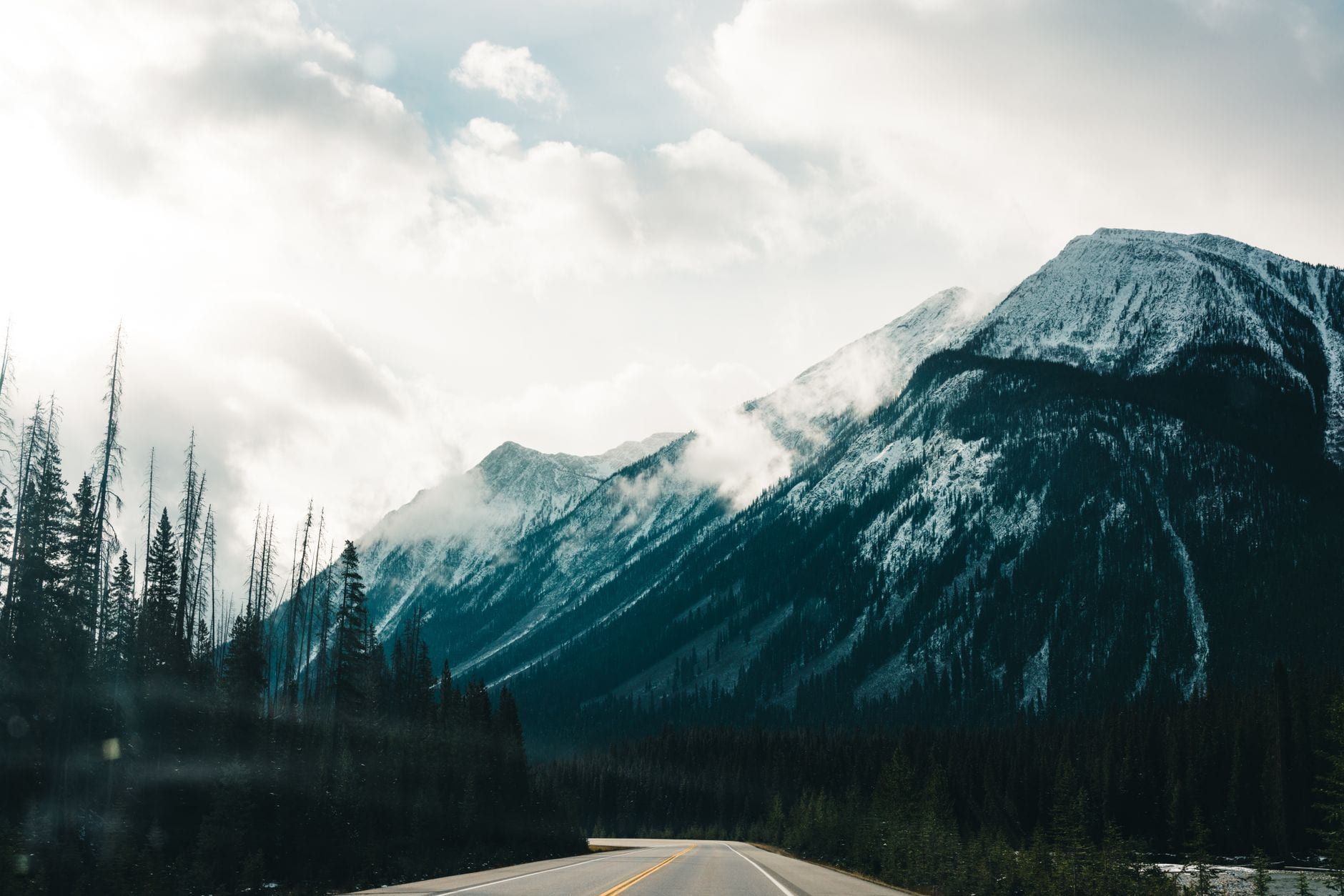
A grizzly bear flips boulders for grubs on an avalanche slope above the Icefields Parkway. Bighorn sheep lick road salt on the Lake Minnewanka Loop, backing up traffic for a quarter mile. Elk graze the fairways of the Banff Springs Golf Course at dusk, close enough to touch and dangerous enough that Parks Canada warns you not to. Banff National Park packs an outsized cast of wildlife into 6,641 square kilometres of the Canadian Rockies, and unlike a safari, you don't need a guide or a permit to see most of it — just a car, a decent pair of binoculars, and some idea of what you're looking at.
This guide sorts the animals you'll likely see from the ones you probably won't, corrects a few numbers that get repeated wrong online (no, Banff does not have caribou anymore), and lays out exactly how close you're legally allowed to get. Read the safety section before you read the species list — the rules are the same whether you're photographing a marmot or backing away from a grizzly.
Banff's Wildlife at a Glance
Parks Canada's official count puts Banff's wildlife at 53 mammal species, more than 311 species of birds, 19 fish species (nine of them introduced), four amphibians and a single reptile species. Add 844 plant species and five rare invertebrates, including the endangered Banff Springs snail, and you get one of the more biologically layered patches of the Canadian Rockies. Several travel sites quote a total of 379 species; that figure doesn't reconcile with Parks Canada's own breakdown, so this guide sticks to the agency's published numbers throughout.
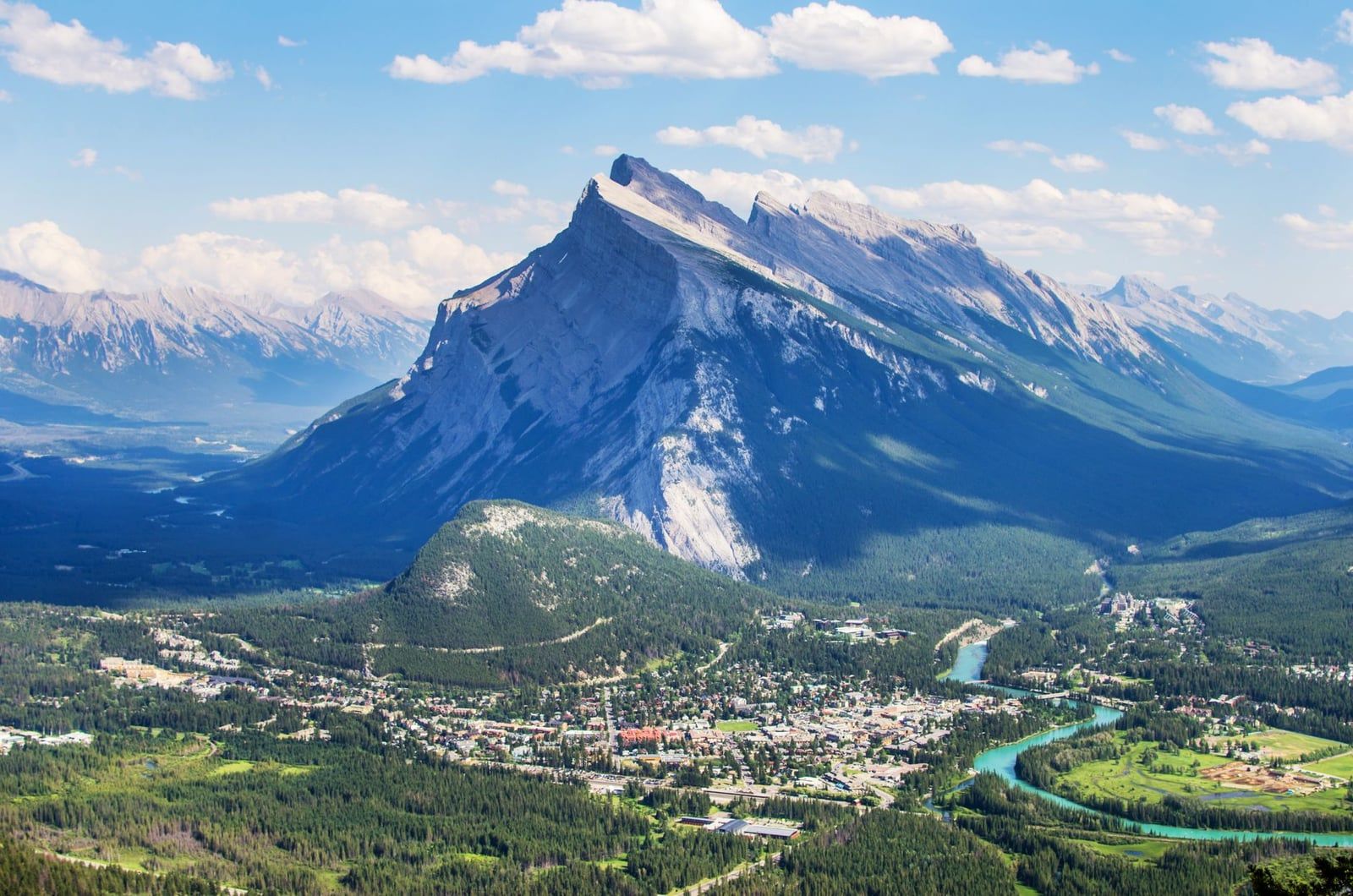
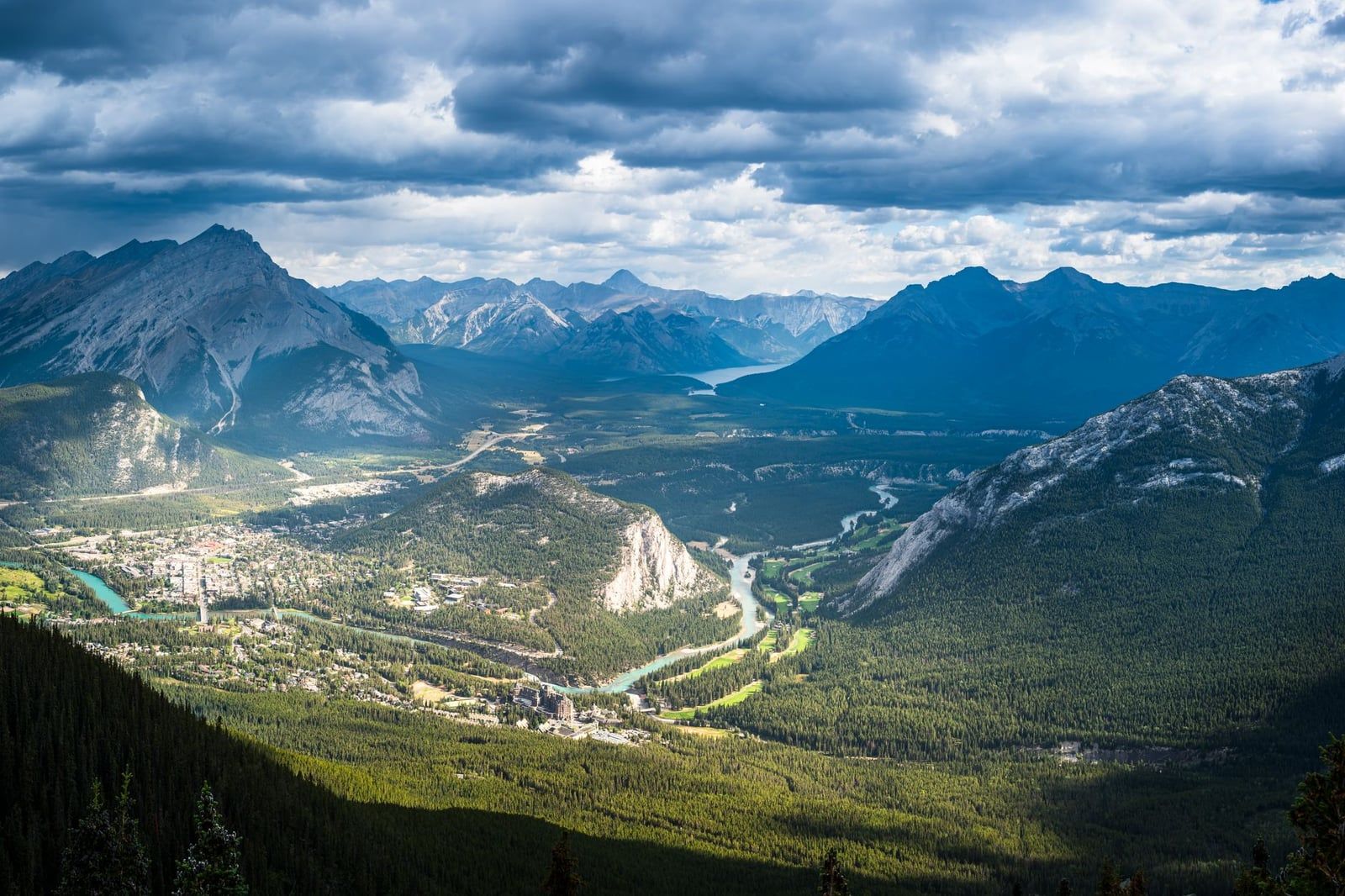
Where you spot an animal depends heavily on elevation. The montane ecoregion — river valleys and the Banff townsite itself — covers only about 3% of the park but is the most productive habitat, supporting elk, deer, and the odd wandering bear. Subalpine forest, roughly 53% of Banff, is prime moose and grizzly country, thick with spruce and pine up to the treeline. The remaining 44% is alpine: rock, ice, and meadow above about 2,300m, where bighorn sheep, mountain goats, marmots, and pika hold on through short summers. Knowing which zone you're in tells you what to expect to see.
Large Mammals: The Animals Most Visitors Come to See
These are the animals that show up on postcards and phone screens, and the ones most visitors specifically come to see. All six are relatively common — knowing what separates one from another turns a blurry brown shape into a proper sighting.
Grizzly and Black Bears
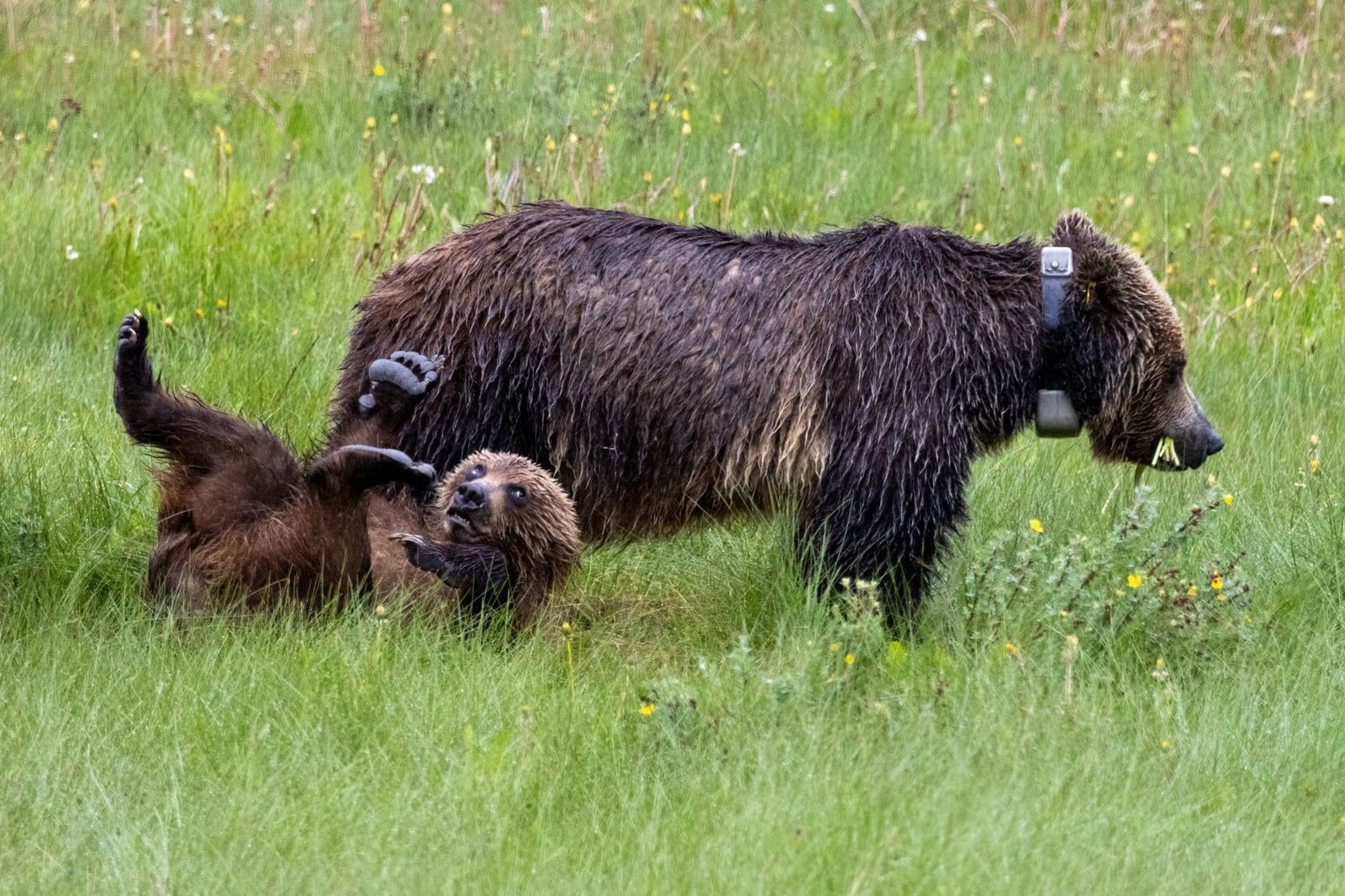
Roughly 65-70 grizzly bears and only 20-40 black bears live in Banff — a threatened population, and a reversal of what most visitors expect from elsewhere in North America. Look for the grizzly's shoulder hump, a muscle mass built for digging, a dished, concave face profile, and long, pale claws made for tearing into roots and ground-squirrel burrows. Black bears have a straighter face, no hump, and shorter, dark, curved claws for climbing — coat color is useless for telling them apart, since black bears here often run brown or cinnamon.
Both species are most active at dawn and dusk, and turn up on open avalanche slopes and berry patches through August and September. If you see one from a pullout, stay in your vehicle — it's the easiest 100m buffer you'll ever get.
Elk
Elk are Banff's most common large mammal, numbering in the thousands, and by most measures the most dangerous animal in the park — not because they're aggressive by nature, but because they're everywhere, including the townsite itself. Cows with calves get defensive from mid-May to early July, and bulls turn unpredictable during the rut, late August through mid-October, when a bugling male with a full rack will charge anything that gets too close, parked cars included. Give any elk a wide, unhurried berth in those windows.
Moose
Moose numbers have dropped through the Bow Valley over the past few decades, a decline tied to a liver fluke parasite, the return of wolves as a predator, and collisions with vehicles and trains. Your best odds now are farther up the Icefields Parkway, around Waterfowl Lakes and Saskatchewan River Crossing, where they wade into ponds and wetlands to feed on aquatic plants in early morning.
Bighorn Sheep and Mountain Goats
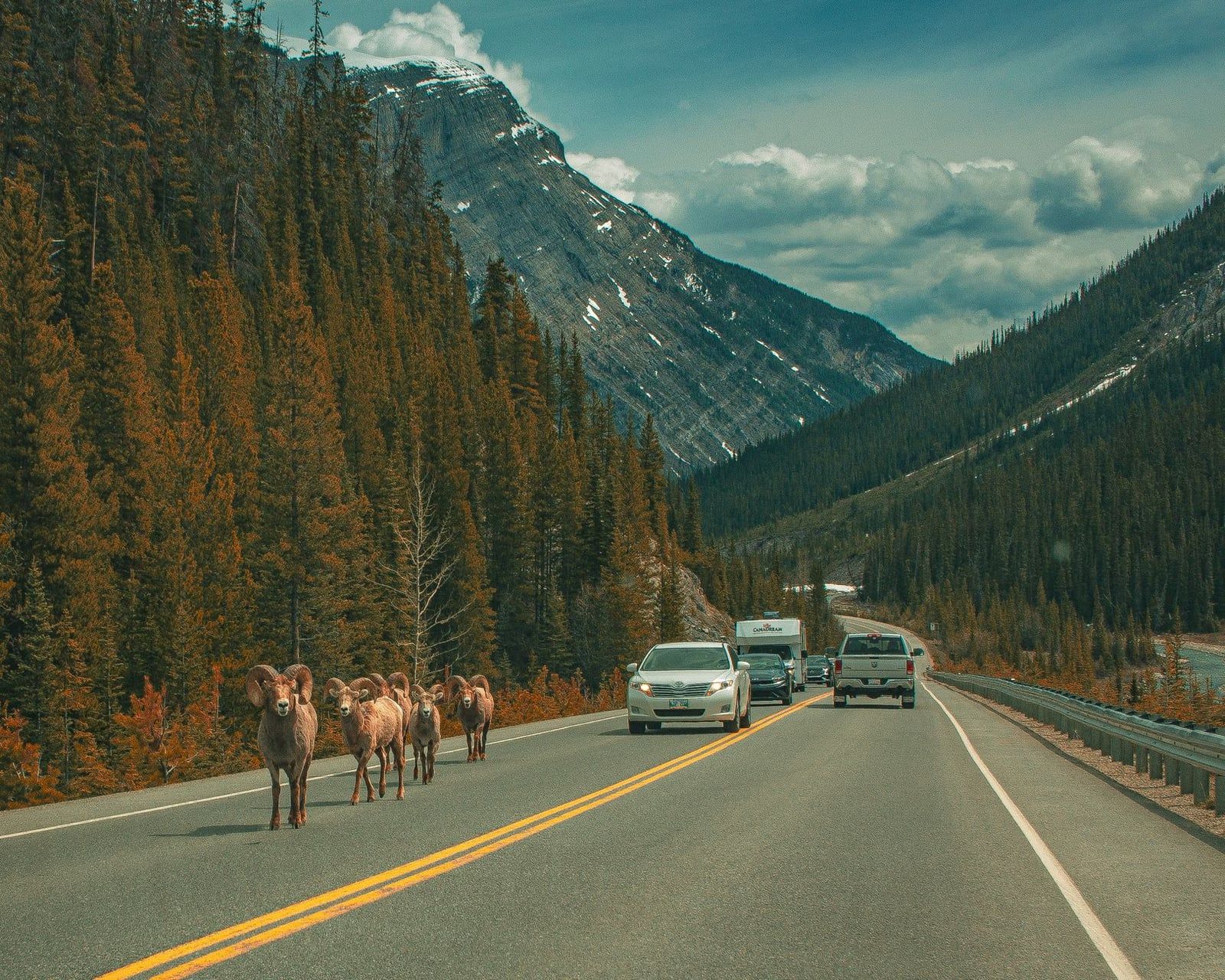
Both graze the same rocky terrain and get mixed up constantly, but they're easy to tell apart once you know the tell: bighorn sheep have brown coats and thick, curled horns on both sexes (a ram's horns curl into a full loop), while mountain goats are shaggy and white with short, black, straight horns on males and females alike. Sheep are the ones you'll likely meet in traffic — they gather on the Lake Minnewanka Loop and roadside cliffs along the Icefields Parkway to lick mineral salt off the pavement. Goats stick to steeper, higher ground and rarely linger near roads.
Deer
Mule deer and white-tailed deer both live around Banff's valley floor, and the fastest way to tell them apart is the exit: a fleeing white-tail flags its tail straight up, a bright white flash, while a mule deer bounces away stiff-legged on all four feet at once, tail low. Mule deer also carry noticeably larger ears and a white rump patch. Both browse forest edges around the townsite and Vermilion Lakes, often at first light.
Elusive Predators and Rare Species
Banff has wolves, cougars, lynx, and wolverines on its species list, but seeing one is closer to luck than planning. Here's what's actually out there, and what isn't anymore.
Wolves
About 45 wolves live in Banff, split across five packs. Three keep to remote country and are rarely seen; the Cascade pack, which ranges near Lake Minnewanka in winter, and the Bow Valley pack, which works the Banff-Lake Louise corridor year-round, account for most reported sightings. Even so, a wolf sighting is a genuine event, not something to plan a trip around. Size gives them away when you do see one: wolves run 30-45kg with a broad snout and travel in a loose line as a pack, while coyotes are half the size, sharper-faced, and usually alone or in pairs.
Coyotes
Coyotes are the ones you'll actually see, often trotting along road shoulders near the townsite at dawn. Vehicle traffic is their biggest threat in the park, and a roadside coyote that looks unbothered by cars is usually habituated — a bad sign for the animal, not a photo opportunity.
Cougars and Lynx
Cougars follow deer and elk through the valleys but avoid people so thoroughly that most residents never see one in a lifetime here. Lynx are similarly private, hunting mostly at night in subalpine forest, and their numbers rise and fall with the snowshoe hare cycle they depend on almost entirely. Neither is a realistic target for a wildlife-viewing trip — treat any sighting as a bonus.
Wolverines
Wolverines range across Banff's high country in numbers too low to estimate reliably, covering huge territories alone above the treeline. They're the hardest mammal in the park to see on purpose.
Caribou: setting the record straight
Banff has no caribou left, despite what a few older articles still claim. The park's last remnant herd, five animals, died in an avalanche near Molar Creek, north of Lake Louise, in 2009, and the population was never reestablished. If you want a shot at caribou in the Canadian Rockies, that means Jasper, not Banff.
Small Mammals and Birds Worth Watching For
Skip the binoculars trained only on bears and elk — the smaller residents are often the easiest actual sightings of the day, especially on any hike above the treeline.
Hoary Marmot and Pika
Hoary marmots earn the nickname 'whistle pig' for the sharp alarm call they give from talus slopes when a hiker gets close; look and listen for them around Sulphur Mountain's summit boardwalk and the rockpiles near Moraine Lake. Pika are smaller and don't whistle so much as squeak — tiny, tailless relatives of rabbits that spend summer hauling mouthfuls of grass into rock-pile haypiles for winter. Both live only near or above the treeline, so you won't find either one down in the valley.
Beaver
Canada's national animal builds lodges and dams along the quiet backwaters of the Vermilion Lakes and the Bow River, usually visible around dusk when beavers become active. A sharp tail-slap on the water is a warning you're too close — that's the cue to stay put and watch rather than move in. A paddle along these same waters on a guided canoe trip is a quiet way to get eye-level with lodges you'd otherwise miss from shore.
Porcupine
Contrary to the old myth, porcupines can't throw their quills — they release on contact, barbed and painful, when something (a curious dog, usually) gets swatted by the tail. Look for them slow-climbing trees at dusk, gnawing bark, or ambling across quiet stretches of road at night.
Birds: Eagles, Osprey, and Grouse
Banff's official bird list runs past 311 species, and three are worth specifically watching for. Bald eagles fish the Bow River and nest in tall snags near the Vermilion Lakes; osprey do the same job with a more acrobatic dive, plunging feet-first into the water. Dusky grouse blend into forest-edge undergrowth so well you'll often hear the low, booming call before you see the bird, while white-tailed ptarmigan pull the same trick above the treeline, in a coat that turns white for winter. Ground squirrels and chipmunks, meanwhile, are the sighting you're guaranteed on almost any trail in the park.
Where and When to See Wildlife in Banff
Location and timing matter more than luck. These four routes account for most reliable sightings in the park, and each rewards a different kind of visitor.
Bow Valley Parkway
The Bow Valley Parkway (Highway 1A) runs 48km between Banff and Lake Louise as a slower, quieter alternate to the Trans-Canada Highway, and it's one of the most productive wildlife drives in the park at dawn and dusk — elk, black bears, and coyotes all use the corridor. Parks Canada closes sections of it at night in spring to protect denning and calving wildlife, so check current restrictions before planning a sunset drive.
Icefields Parkway
The Icefields Parkway runs roughly 230km from Lake Louise to Jasper, climbing past glaciers and turquoise lakes, and turns up bighorn sheep, mountain goats, bears, and moose along almost its entire length. Fuel up and download offline maps before you go — cell coverage disappears for long stretches. If you're driving it yourself rather than joining an organized trip, sort out the route and stops beforehand, since pullouts fill fast in midsummer.
Lake Minnewanka Loop and Moraine Lake
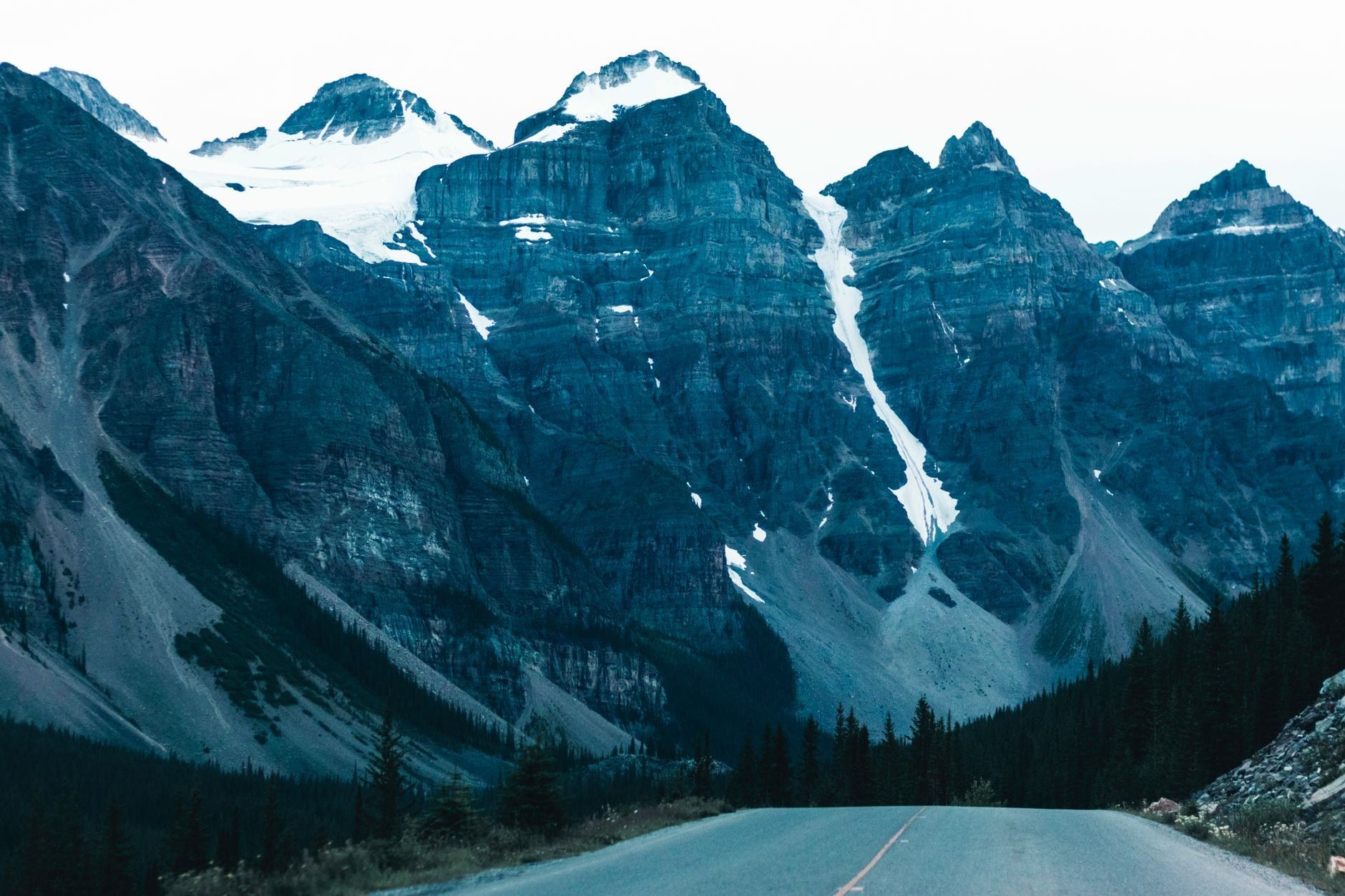
The Lake Minnewanka Loop, just east of the townsite, is bighorn sheep territory year-round and one of the better winter spots for wolf and cougar tracks, if not the animals themselves. Around Moraine Lake, in the Valley of the Ten Peaks, marmots and pika work the rockpile you'll climb for the lake's view — remember the road there is shuttle-only, with no personal vehicle access.
Vermilion Lakes and Sulphur Mountain
Vermilion Lakes, a five-minute drive from downtown Banff, is the park's best low-effort spot for birds and beaver, and elk herds gather on the flats here in late winter when snow elsewhere gets deep. Up on Sulphur Mountain, the gondola's summit boardwalk puts marmots, pika, and the occasional bighorn sheep within a few meters of the walkway — a good add-on to a first day exploring the things to do around Banff.
Season shifts the odds as much as location does. Spring (May-June) brings bears out of dens hungry and elk calves onto valley floors, but also triggers the defensive behavior that makes this the riskiest season for close encounters. Summer offers the longest daylight windows and the most consistent sightings of sheep, goats, and elk with young, alongside the heaviest crowds. Fall (late August-October) is prime time — animals feed hard before winter and the elk rut puts bulls on constant display, though that same rut makes elk more dangerous to approach. Winter narrows the list to hardy residents: wolves, coyotes, and the occasional moose, tracked more often in snow than actually seen. For a fuller rundown of what each month looks like, see our season-by-season guide.
Wildlife Safety and Viewing Etiquette
Banff enforces its wildlife rules with real fines, not suggestions. Know these before you leave the townsite.
Parks Canada sets hard minimum distances, not guidelines: 30m from elk, moose, deer, sheep, and goats, and 100m from bears, wolves, cougars, and other carnivores.
| Ungulates (elk, moose, deer, sheep, goats) | Carnivores (bears, wolves, cougars, coyotes) | |
|---|---|---|
| Minimum distance | 30m (about 3 bus lengths) | 100m (about 10 bus lengths) |
| Riskiest season | Spring calving (mid-May–early July) and fall rut (late Aug–mid-Oct) | Berry season, late summer through fall |
Feeding any animal is illegal across Canada's national parks and can bring a fine up to $25,000; store food and anything scented in your vehicle or a wildlife-proof locker, not a tent vestibule. Dogs must stay leashed at all times — an off-leash dog can provoke a defensive charge from an elk or bear that a leashed one never would.
Carry bear spray on any hike, clipped to a belt or chest strap where you can reach it in under two seconds, not buried at the bottom of a pack. Hike in a group of four or more, make noise on blind corners, and know that Parks Canada credits spray with deterring the large majority of documented close encounters. Several guided hiking trips build this into the route by default, with a guide carrying spray and reading the terrain for you.
If you hit a 'bear jam' — a line of cars stopped for a roadside sighting — stay inside your vehicle, keep it brief, and move on rather than parking on the shoulder. A 2008-2016 study of human-wildlife conflicts in Banff found 96% of incidents happened within 1km of a trail or road, tied directly to townsite activity and traffic rather than remote backcountry encounters.
The Trans-Canada Highway through Banff has 44 wildlife crossing structures, 38 underpasses and 6 overpasses, spread along an 82km stretch, and they've cut wildlife-vehicle collisions by more than 80% overall and 96% for elk and deer specifically. It's why you'll see fenced highway margins funneling animals toward a bridge or tunnel instead of the road. A valid park pass is required to stop anywhere in the park, so check current hours and fees before you go.
Frequently Asked Questions
What kind of animals live in Banff National Park?
Officially, 53 mammal species, more than 311 bird species, 19 fish species, four amphibians, and one reptile, according to Parks Canada. The mammal list runs from grizzly bears, wolves, and cougars down to pika and ground squirrels.
What is the most dangerous animal in Banff National Park?
Elk cause more injuries than any other animal most years, particularly during spring calving (mid-May to early July) and the fall rut (late August to mid-October), when they'll charge people who get too close. Bears and moose can also turn aggressive if surprised or cornered.
Are there wolves in Banff National Park?
Yes — roughly 45 wolves in five packs. The Cascade pack, near Lake Minnewanka in winter, and the Bow Valley pack, along the Banff-Lake Louise corridor, are seen most often, though any sighting is still uncommon.
Is there still caribou in Banff National Park?
No. The park's last caribou herd, five animals, died in a 2009 avalanche near Molar Creek north of Lake Louise, and the species was never reestablished. Caribou now only turn up farther north, in Jasper.
How close can you get to wildlife in Banff?
Parks Canada requires at least 30m from elk, moose, deer, sheep, and goats, and 100m from bears, wolves, cougars, and other carnivores. Feeding any animal is illegal and can carry a fine up to $25,000.
When is the best time to see wildlife in Banff National Park?
Spring and fall bring the most active sightings — bears emerging and elk calving in spring, the rut and pre-hibernation feeding in fall. Summer gives the longest daylight for viewing sheep, goats, and elk with young, while winter narrows things to hardy residents like wolves and coyotes.
Where is the best place to see wildlife in Banff?
The Bow Valley Parkway (48km, Banff to Lake Louise), the Icefields Parkway (about 230km to Jasper), the Lake Minnewanka Loop, and Vermilion Lakes are the most consistently productive spots you can reach by car.
Do I need bear spray in Banff?
Yes, for any hike beyond a short paved trail. Keep it somewhere you can reach it in seconds, hike in a group of four or more, and make noise on blind corners and near rushing water where a bear might not hear you coming.