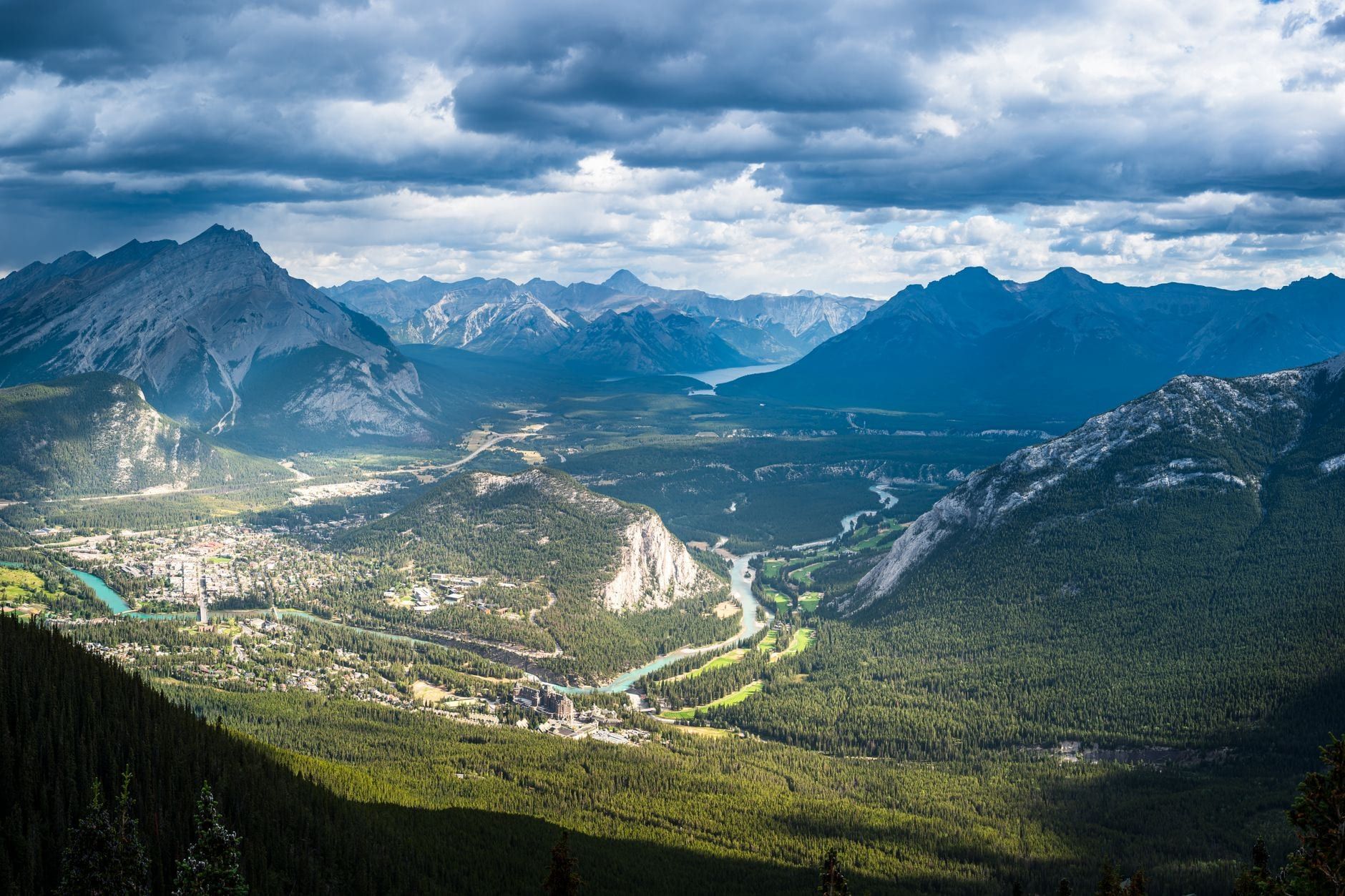
June through September brings the warmest weather, full trail access, and the longest days to Banff National Park, while December through March is prime time for skiing at Lake Louise, Sunshine Village, and Mt. Norquay. There's no single correct month here — a hiker chasing high alpine passes and a skier chasing fresh powder need opposite calendars, and a budget traveler wants neither of their peak seasons.
Banff drew 4.515 million visitors in 2025, a record, and most of them showed up in July and August. That crush shapes parking, lake color, and hotel rates across the whole year. This guide breaks the calendar down by season, by month, and by specific interest — hiking, skiing, larches, wildlife, northern lights — so you can pick dates that match your actual reasons for going.
Quick Answer: When to Go Depending on What You Want
There's no single best month for Banff — the right one depends on what you're chasing. For overall balance, pick June or September: both offer mild weather, open or reopening trails, and crowds well below the July-August peak. If warm weather and full lake access matter most, July and August deliver, with daytime highs of 20-25°C and every trail, shuttle, and campground running. Skiers get the widest window in the Rockies: Banff's three resorts, Mt. Norquay, Sunshine Village, and Lake Louise, operate November through May, one of the longest non-glacial ski seasons anywhere.
- Best overall balance: June or September
- Warmest weather and full lake access: July-August
- Skiing: December-March, with March the best snow-to-mildness ratio
- Fewest crowds and lowest prices: April, May, late September-October, November
- Golden larches in the alpine: mid-to-late September into early October
Keep reading for the weather data, the shuttle logistics, and the specific months that answer whatever question actually brought you here.
Best Time to Visit by Season: Weather, Crowds, and What You Can Do
Each season in Banff trades something for something else: heat for crowds, quiet for cold, low prices for frozen lakes. Here's what each one actually delivers.
Summer (June-August)
Summer is Banff at full capacity, literally. July and August average daytime highs of 20-25°C, though evenings often drop below 10°C once the sun dips behind the peaks. Parks Canada logs roughly 600,000-650,000 visitors in each of those two months, more than triple the winter numbers, so parking at Lake Louise and Moraine Lake fills within an hour of sunrise. June is the wettest month of the year, with afternoon thunderstorms rolling in most weeks, but by July the high trails have usually shed their snow and the Icefields Parkway is fully open all the way to the toe of the Athabasca Glacier. Renting a canoe on Lake Louise or Moraine Lake is a classic summer add-on, and guided canoe trips run on both lakes. Wildfire smoke is a real risk from July onward and has shown up as early as April in recent years, so check air quality before committing to a multi-day hike.
Fall (September-October)
Fall is when Banff regulars plan their own trips. September holds onto summer's mild days (10-18°C) while crowds thin fast after Labour Day, and the larches turn gold in the back half of the month. October cools quickly to daytime highs of just 5-10°C, snow starts appearing at higher elevations, and some alpine trails close by month's end. Moraine Lake Road typically shuts to vehicle and shuttle traffic by mid-October regardless of that year's weather. September is arguably the strongest all-around month in the park — warm enough to hike in a t-shirt at midday, quiet enough to find lake parking, and colorful enough to justify timing a trip around it.
Winter (November-March)
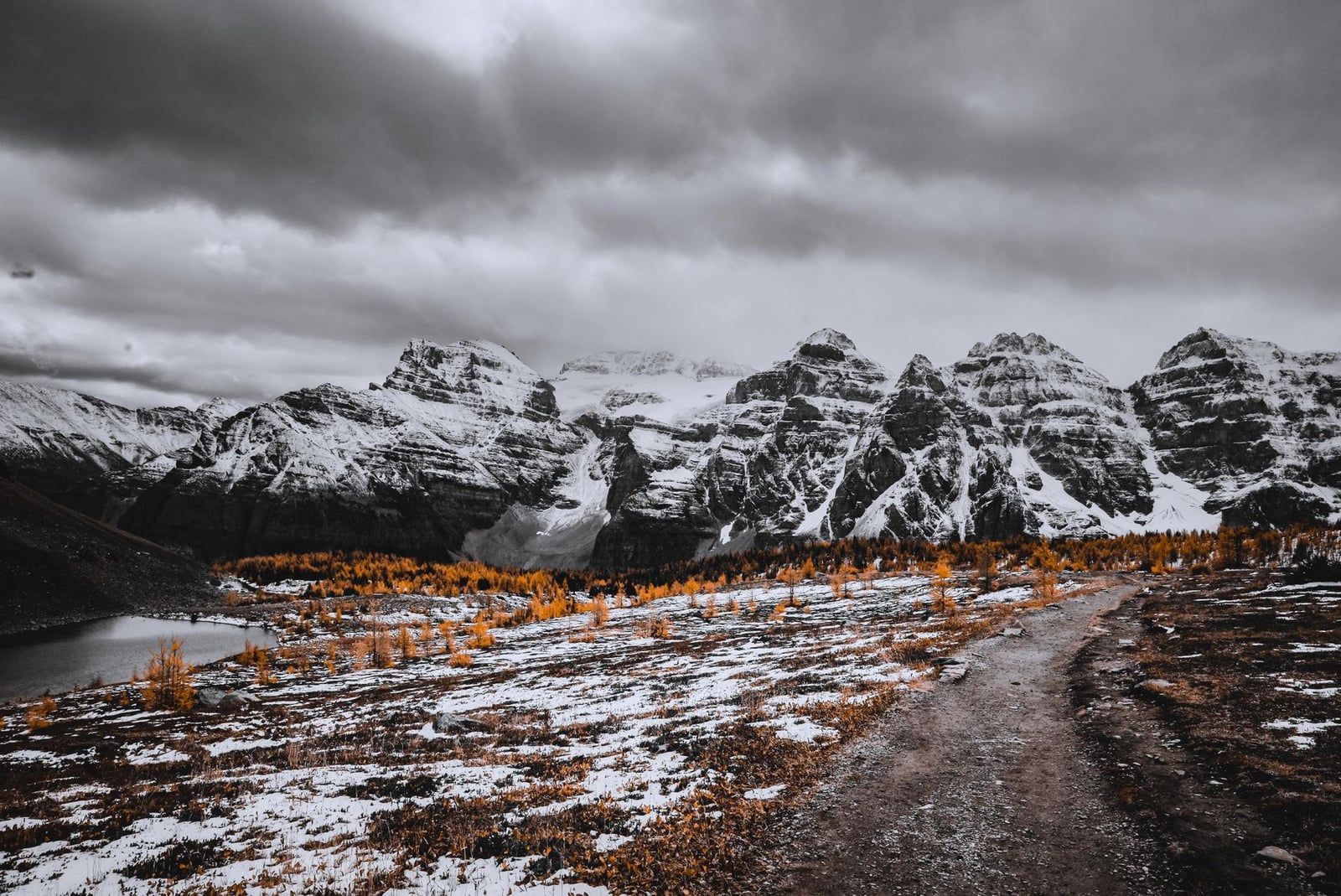
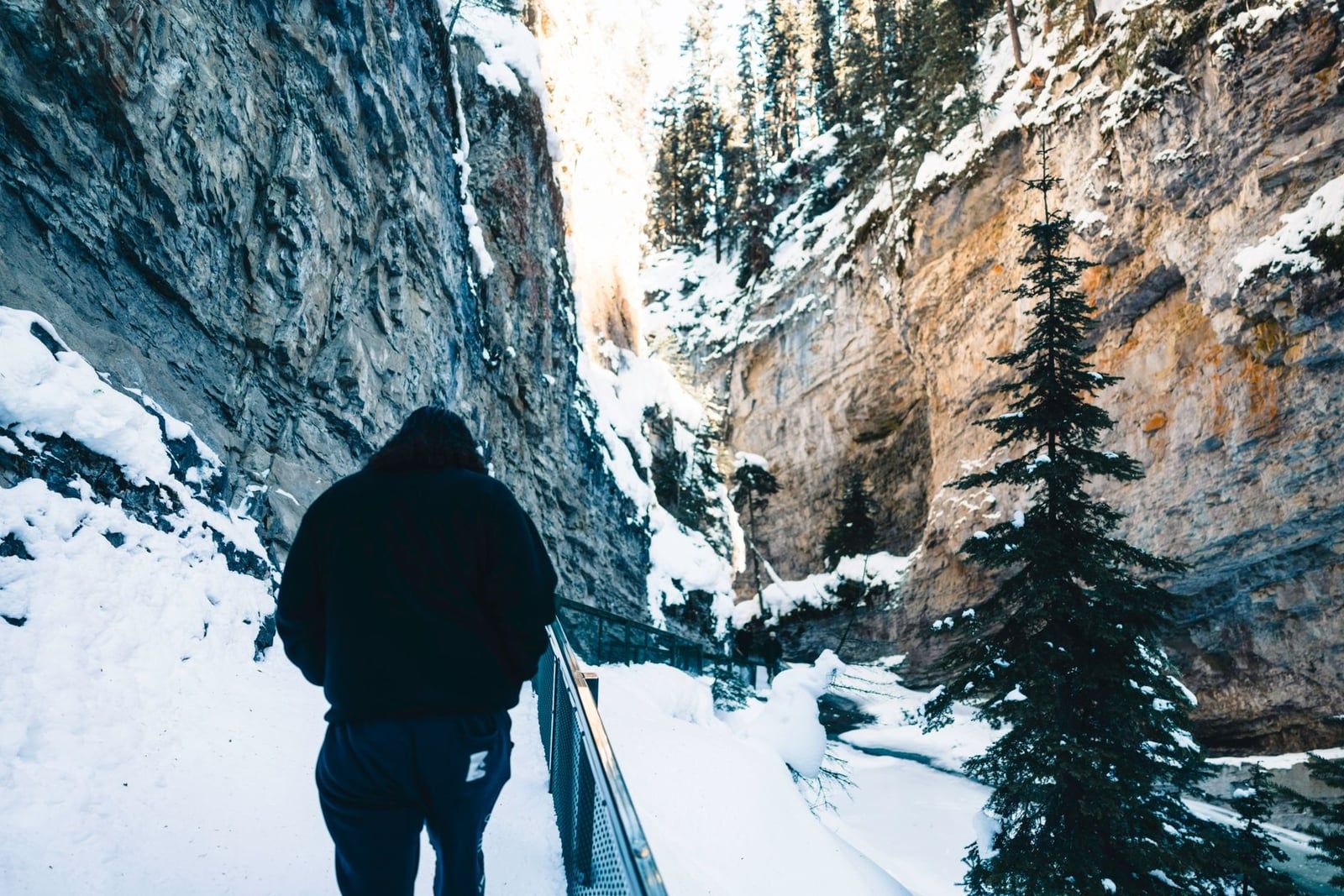
Winter turns Banff into a ski town. December through February average daytime temperatures of -2 to -10°C, with overnight lows sometimes hitting -15°C or colder, and snow covers everything above the valley floor. That cold comes with a payoff: three ski resorts, frozen lakes for skating and ice walks, a soak at the Banff Upper Hot Springs, and roughly a third of the summer crowds (150,000-200,000 monthly visitors against 600,000-plus at the July peak). Moraine Lake Road closes to all vehicles for the season and gets groomed for cross-country skiing instead. Pack for real cold, book ski passes ahead of the holiday weeks, and expect short days — sunset can come as early as 4:30 pm in December.
Spring (April-May)
Spring is Banff's awkward in-between. April daytime highs run about 5-10°C and May climbs to 10-15°C, but snow lingers at higher elevations well into May, and Lake Louise and Moraine Lake are often still frozen or only half thawed. It's also the cheapest, quietest stretch of the year, since ski season has wound down and summer crowds haven't arrived yet. Bears come out of hibernation and forage near valley roadsides in spring, so watch for trail and campground closures tied to wildlife activity. Treat spring as a budget trip built around town, the hot springs, and lower-elevation trails like the Bow River pathway, not a lake-hopping itinerary.
| Season | Avg Daytime Temp | Crowd Level | Top Activity |
|---|---|---|---|
| Summer (Jun-Aug) | 20-25°C | Peak | Hiking and full lake access |
| Fall (Sep-Oct) | 5-18°C | Moderate, falling | Larches and quiet trails |
| Winter (Nov-Mar) | -10 to -2°C | Low | Skiing and snowshoeing |
| Spring (Apr-May) | 5-15°C | Low | Budget travel and hot springs |
Best Time to Visit Banff Month by Month
Mountain weather can flip within a week, but the pattern below holds most years. Use it to zero in on a travel month, then check current road and trail bulletins closer to your trip date.
January is the coldest month, with a deep snowpack, thin post-holiday crowds, and ski pricing before it climbs. February stays cold but gets busier around Family Day, with frozen waterfalls near their photogenic peak. March is the strongest all-round ski month: milder afternoons, a still-deep snowpack, and shoulder pricing that beats the holiday rush.
April is the cheapest month on the calendar, though most lakes are still frozen and the weather swings hard. May brings the first wildflowers and the start of lake thaw, still at low prices and thin crowds. June sees lakes fully open, Moraine Lake Road reopening around June 1, nearly 17 hours of daylight, and building crowds despite being the wettest month of the year.
July is the warmest month, with alpine wildflowers at their best and peak-season crowds arriving alongside the first wildfire smoke risk. August keeps the best weather stats of the year but also the highest smoke risk and the fullest parking lots. September is the locals' pick: warm days, thinning crowds, and larches turning gold from the third week onward.
October opens with the last of the larches before real snow arrives by month's end and Moraine Lake Road closes for the season. November is the coldest shoulder month but also the cheapest and quietest, with ski season starting and lake ice thick enough to skate. December is cold and festive, with markets and events drawing crowds back for the holidays as ski season ramps up.
If you only remember three months, make them these: September for the best overall balance, March for skiing without deep-winter cold, and April or November if price is the deciding factor. Don't pin your hopes on lake photos in April or November, though — both Lake Louise and Moraine Lake are usually still frozen or just breaking up.
Best Time to Visit for Specific Interests
Some searches for Banff timing aren't about the calendar at all — they're about one specific thing. Here's the short answer for each.
Hiking
High-alpine trails are snow-free from July through August, which is when routes like the Plain of Six Glaciers and the climb to the Lake Agnes Tea House (3.4 km, about 400 m of elevation gain) see full traffic and the best views. September offers the same trails with a fraction of the people and cooler temperatures for the climb, a fair trade for slightly shorter days. Lower trails below about 2,000 m, including the Bow River pathway and the paved lower section of Johnston Canyon, stay hikeable from May into October. Serious hikers short on planning time often book a guided hiking tour to lock in a trailhead and a route without gambling on conditions.
Skiing and Snowboarding
Ski season runs November through May across Mt. Norquay, Sunshine Village, and Lake Louise, one of the longest non-glacial windows anywhere. March is the sweet spot: the snowpack is still deep, days run noticeably longer than in January, and afternoon temperatures are far more bearable than deep winter's -10°C lows. Early-season skiers in November should expect thinner cover on some runs; late-season skiers in April and May get long, sunny days but softer, slushier snow by afternoon.
Turquoise Lakes at Their Bluest
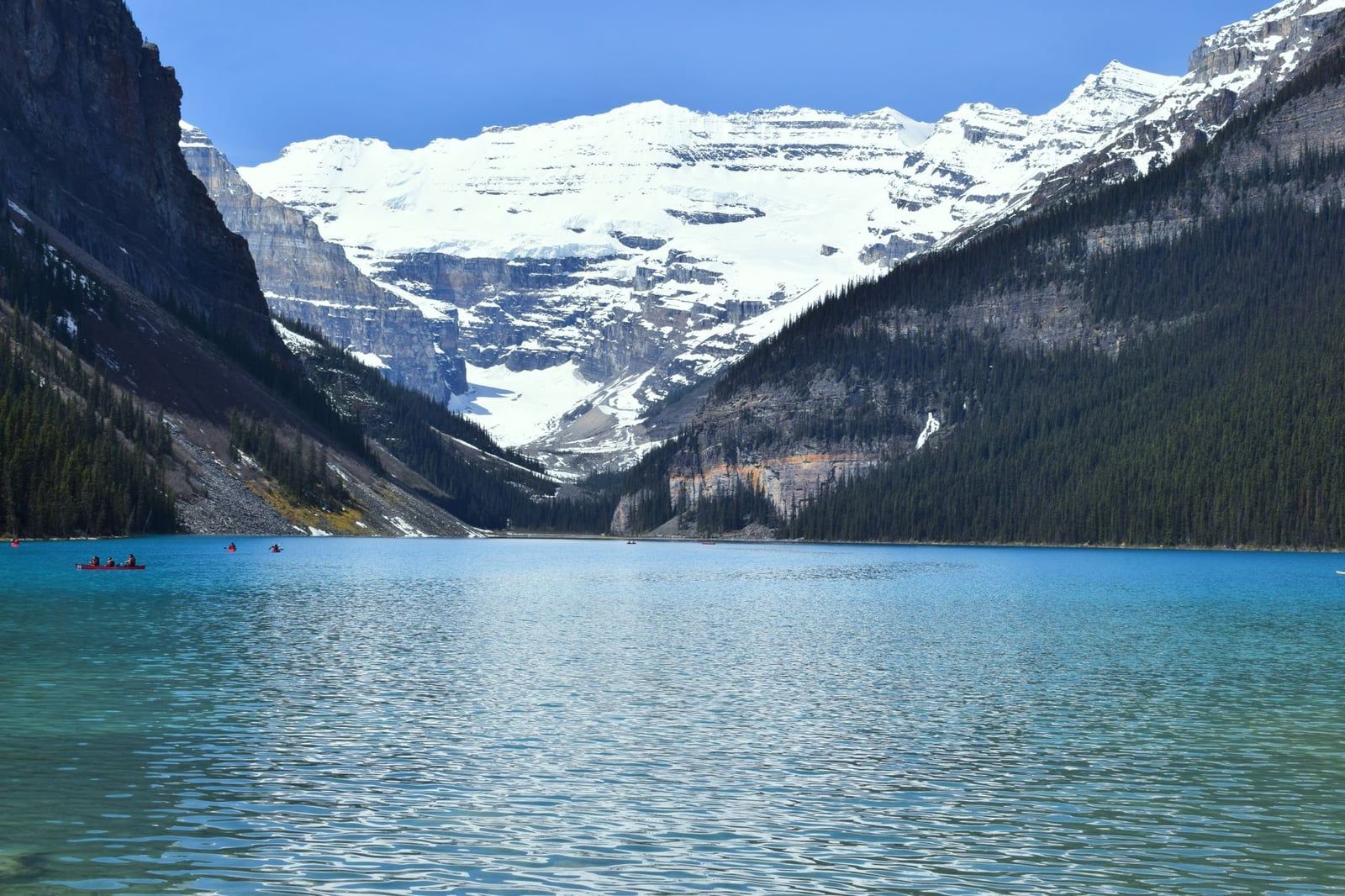
Lake Louise and Moraine Lake get their color from glacial rock flour, fine sediment suspended in meltwater, which takes weeks of summer melt to build up. That means the lakes look their bluest from mid-June through September, once the ice has cleared and before fall drains the color back down. Get there at opening time. Both fill their limited parking — Moraine Lake has none at all for private cars — within an hour of sunrise through peak summer, and the short climb up the Rockpile Trail at Moraine Lake is worth doing before the crowds arrive.
Wildflowers and Larches
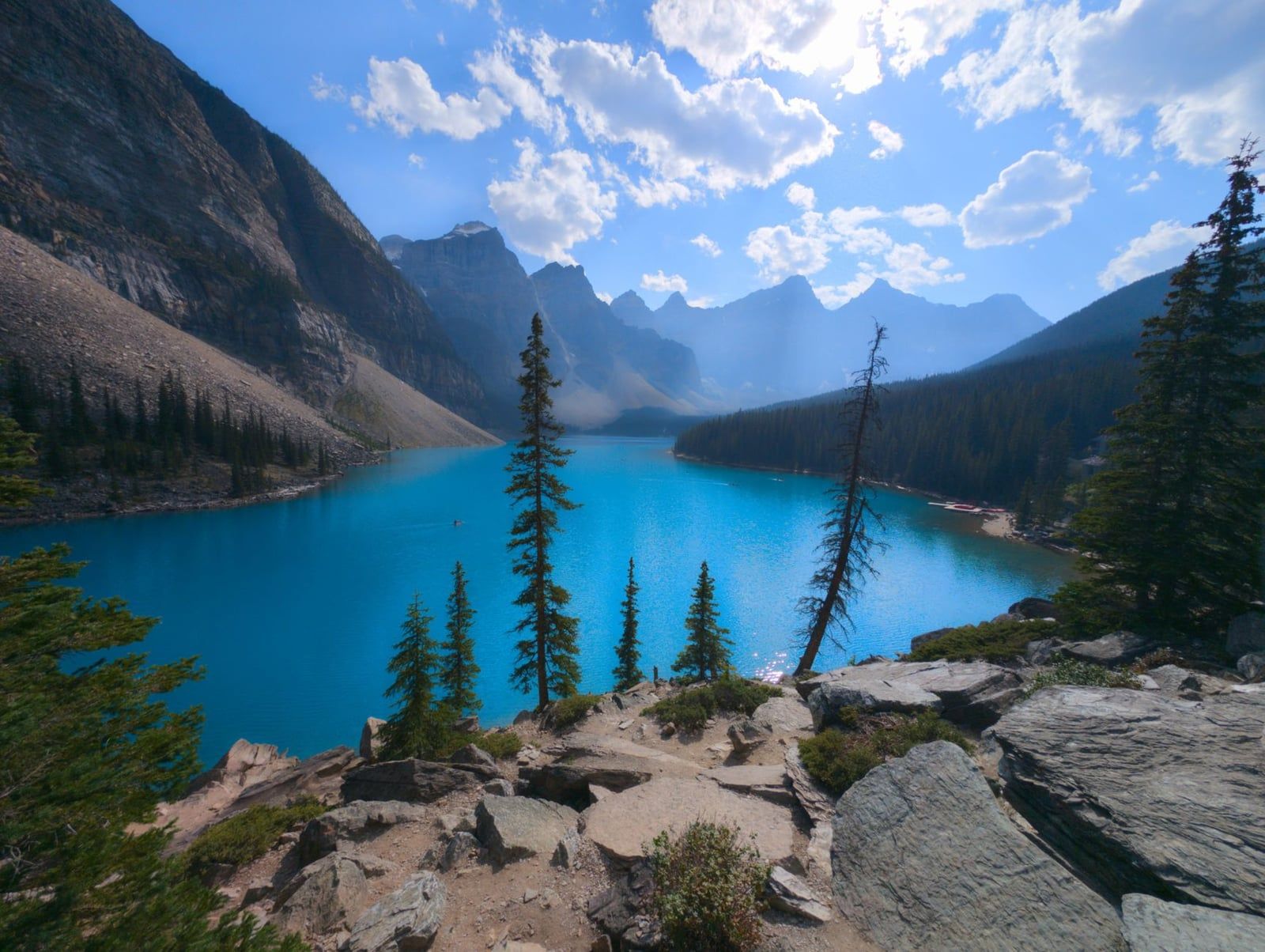
Alpine wildflowers peak in late July and early August at high meadows like Sunshine Meadows and Healy Pass, right after the snow finishes melting out. Larches are a separate show: these needle-dropping conifers turn gold for about two weeks, typically the back half of September into early October, concentrated in spots like Larch Valley near Moraine Lake. Timing shifts a little every year with frost and snowfall, so build a few flexible days into a trip if the larches are the whole point.
Wildlife Viewing
Spring brings bears down to valley-bottom roadsides to forage on new growth, making April and May decent months for cautious, from-the-car sightings. Bighorn sheep gather at roadside salt licks in spring and early summer, often visible along the Lake Minnewanka loop. September brings the elk rut, when bulls are easier to spot but also more unpredictable near the townsite. A guided wildlife tour knows where animals have been active that week, which beats driving the same loop road hoping to get lucky.
Northern Lights
Aurora odds are best from September through April, once nights are dark and long enough to see anything at all. September, October, and March are the strongest bets within that window, pairing decent solar activity with weather that isn't a total whiteout. Get away from Banff Avenue's streetlights. Vermilion Lakes and the Lake Minnewanka area are the easiest dark-sky spots close to town, and a stargazing tour takes the guesswork out of timing and location.
Saving Money and Avoiding Crowds
April, May, October, and November are the cheapest months, since hotel demand drops once the ski or summer crowds clear out. They're also the quietest: no lineup for the gondola, no scramble for lake parking. The trade-off is real — lakes may still be frozen, some trails close for mud season, and a handful of restaurants and attractions cut their hours.
What to Pack for Each Season
Layering matters more than any single item in the Rockies, since a 20-degree swing between morning and afternoon is normal at any time of year.
Summer
- Light layers plus a warm mid-layer for cool evenings and high viewpoints
- Sun hat, sunglasses, and sunscreen — UV runs stronger at altitude
- Broken-in hiking shoes with grip for rocky, root-covered trails
- A packable rain shell for sudden afternoon thunderstorms
Winter
- Insulated, waterproof winter boots rated well below freezing
- A real down or synthetic parka, not a city coat
- Thermal base layers, plus a hat, neck gaiter, and insulated gloves
- Microspikes or ice grips for sidewalks and lakeshore trails
Shoulder Seasons (Spring and Fall)
- A flexible layering system for near-freezing mornings and mild afternoons
- Waterproof footwear for mud, slush, and half-frozen trails
- A warm hat and gloves, even in May
- Trekking poles for icy or muddy trail sections
How Many Days You Need and Getting Around by Season
Two to three days covers the headline sights: Banff townsite, Lake Louise, Moraine Lake, and Johnston Canyon, at a reasonable pace. Give yourself four days minimum to actually relax into the trip instead of rushing between viewpoints, and stretch to five to eight days to add the Icefields Parkway, a hot springs soak, or a real backcountry hike. If you'd rather not coordinate shuttle times and trailheads yourself, a private tour can build a full day around your own pace instead.
Summer and fall visits mean working around the reservation system. Moraine Lake Road is closed to personal vehicles year-round, so seeing it between June and mid-October requires a Parks Canada shuttle, Roam Transit, or a licensed operator. Book shuttle seats as early as reservations open, since summer slots sell out weeks ahead. Day trips from Calgary often bundle that transport into the ticket, which sidesteps the reservation scramble entirely.
Winter is more relaxed logistically. Roam Transit runs year-round between Banff, Lake Louise, and Canmore and is wheelchair accessible, and most ski resorts run free shuttles from town to the hills. Spring sits between the two systems: roads stay open, but conditions change fast, so check current route and transport options before setting out, and confirm current park hours and entry fees if it's been a while since your last visit.
FAQ
Is it better to visit Banff in summer or winter?
It depends on the goal. Summer (June-August) is best for hiking, full lake access, and long days; winter (December-March) is best for skiing, snowshoeing, and snow-covered scenery. Both are peak-price seasons — if budget matters more than the activity, look at the shoulder months instead.
What is the cheapest time of year to visit Banff?
April, May, October, and November are the cheapest months, thanks to lower demand once the ski or summer crowds clear out. Expect trade-offs: frozen or half-thawed lakes, muddy trails, and shorter hours at a few attractions.
What is the best month to see the larches in Banff?
Larches typically peak in the last two weeks of September into early October, with Larch Valley near Moraine Lake the classic spot. Exact timing shifts year to year with frost and snowfall, so check recent trail reports before locking in dates.
Is Banff crowded in the summer?
Yes. Parks Canada estimates put July and August visitor numbers at roughly 600,000-650,000 each, the highest of the year. Lake Louise and Moraine Lake parking fills within an hour of sunrise, so plan on shuttles or an early start.
Does it rain a lot in Banff?
June is typically the wettest month, usually as short afternoon thunderstorms rather than all-day rain. April through October see the bulk of the year's precipitation overall, but a rain shell handles most of it.
What is the worst time to visit Banff?
Many locals point to November and early April as the least rewarding windows: lakes are frozen or half-thawed, trails run muddy or icy, and several summer attractions haven't opened yet. Prices and crowds are also at their lowest, so it's a fair trade for a budget trip.
How many days do I need in Banff?
Two to three days covers the highlights; five to eight days lets you add the Icefields Parkway, a hot springs stop, and a longer hike without feeling rushed.
When is the best time to visit Banff for skiing?
Ski season runs November through May across Mt. Norquay, Sunshine Village, and Lake Louise. March is the standout month, combining a deep snowpack with milder temperatures and longer daylight than the depths of winter.