The aurora does appear over Banff National Park, several times most years, but it isn't the nightly certainty travelers find in Yukon or Iceland. Banff sits at roughly 51 degrees north, well south of the auroral oval that hovers over the high Arctic, so a visible show here needs a genuinely strong geomagnetic storm. When one hits, though, the glow over Vermilion Lakes or Lake Minnewanka rivals anything further north.
This guide covers when to go, which spots give you the clearest northern horizon, and how to read a KP forecast instead of just hoping. It also covers the gear, camera settings, and etiquette that separate a good night out from three cold hours staring at clouds.
Can You Really See the Northern Lights in Banff National Park?
Locals who chase the aurora around Banff say a truly strong, camera-and-naked-eye show happens only once or twice a year. Fainter, low-KP activity, a dim green smudge on the northern horizon, turns up more often, especially between October and March. Compare that to Yukon, Alaska, Norway, or Iceland, where the aurora oval sits almost overhead most clear winter nights: Banff's latitude puts it on the southern fringe of that oval, so it takes a real geomagnetic storm to push the display this far down.
Treat a sighting as a bonus, not the reason for the trip. The reliable part of a Banff night sky is the darkness itself. The park sits far from major cities, and neighboring Jasper National Park holds one of the world's largest dark sky preserves. Even on a quiet aurora night, lying back at Bow Lake or Cascade Ponds under the Milky Way is worth the drive on its own. For background on the terrain that makes those skies so dark, see our overview of Banff National Park, and remember any overnight drive within the boundary needs a valid pass, covered on our hours and entry fees page.
Best Time of Year and Night to See the Aurora in Banff
Late September through April is aurora season in Banff, the stretch when nights are long enough and dark enough to matter. December through February gives you the darkest, longest nights of all, and that's when locals report the brightest shows. Most sightings cluster between 10pm and 2am, though a strong storm can light up the sky earlier in the evening or closer to dawn.
Summer visitors get a much thinner chance. Alberta's short summer nights barely get properly dark, so if the aurora appears at all in June or July, expect it around 2 or 3am, and don't build a trip around it. One upside right now: the sun is running through solar maximum, its most active phase in an 11-year cycle, which has pushed geomagnetic storms further south than usual through the mid-2020s. That's raised Banff's odds compared with a typical quiet-sun year. Our season-by-season guide to visiting Banff covers how aurora season overlaps with weather and crowds.
What Causes the Northern Lights (and Why Banff's Odds Are Rising Right Now)
The aurora starts on the sun. Solar wind carries charged particles toward Earth, and when they slam into gases high in the atmosphere, they glow. Oxygen atoms produce the green and red bands; nitrogen produces blue and purple. The result ripples and shifts because the particle stream itself is turbulent, not because of anything happening at ground level.
Why is Banff hearing about aurora more than it used to? The sun runs on an 11-year activity cycle and is currently near solar maximum, throwing off more frequent and more powerful coronal mass ejections. In May 2024, one of those ejections triggered a geomagnetic storm so strong that aurora was visible as far south as Texas, California, and Florida, and Banff, briefly, became one of the best places on the continent to watch it. That year was rated the best for aurora viewing in over a decade. Solar maximum doesn't guarantee a repeat on any given week, but through the back half of the 2020s the odds sit higher than they have in years.
The Best Places to See the Northern Lights in Banff
Where you stand matters as much as when you go. A spot facing due north with an open horizon beats a prettier lake that faces southeast, and how far you're willing to drive after dark decides how many options you actually have. Here are the six that locals rely on, plus what you need to know about each.
1. Vermilion Lakes
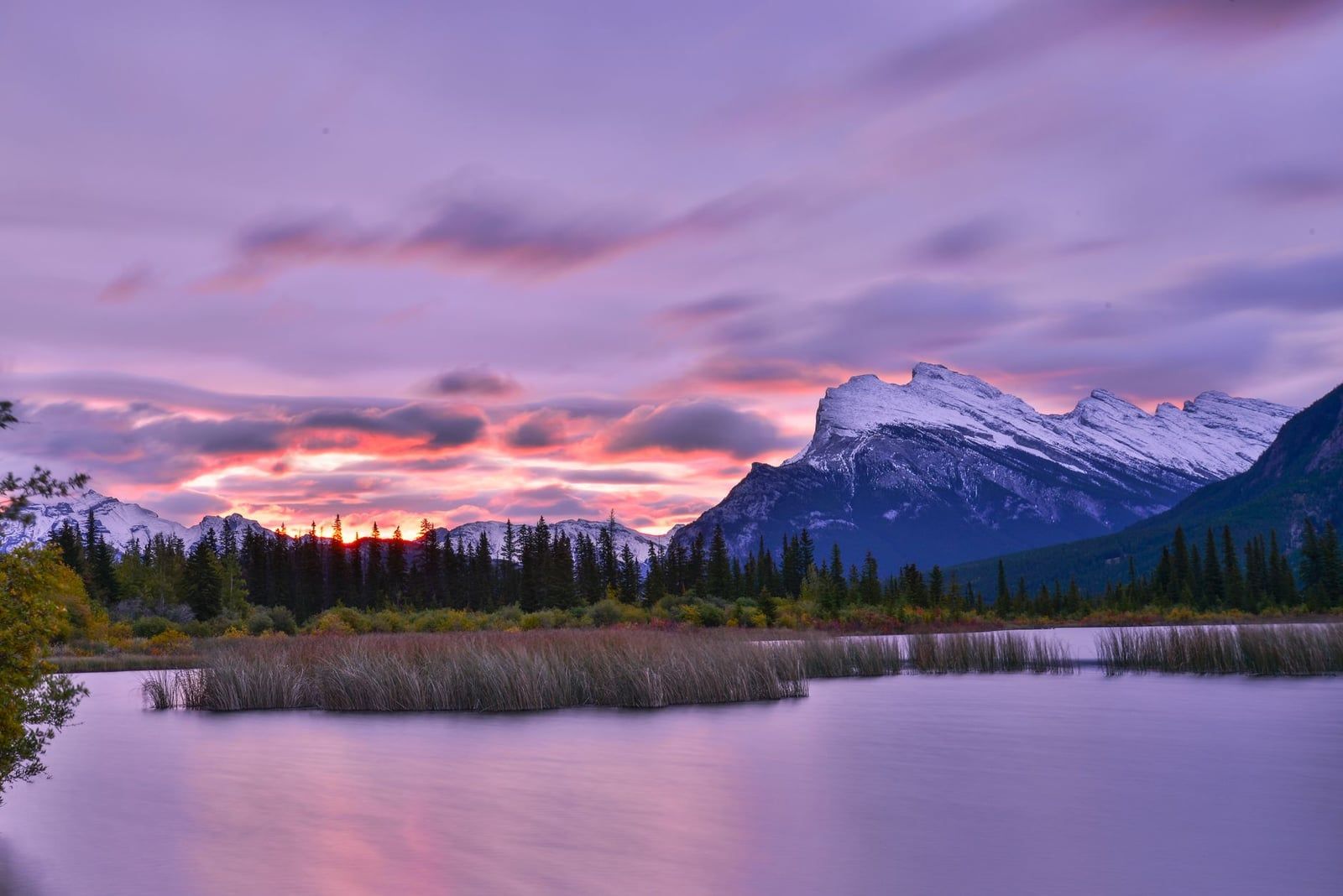
Vermilion Lakes sit a few minutes from downtown Banff, making them the easiest option for anyone without a car. The first dock faces southeast, so most photographers push on to the third lake, which opens onto a wider, better north-facing view with noticeably fewer people. Walk it after dark, or park at one of the small pullouts along Vermilion Lakes Drive.
2. Cascade Ponds
Cascade Ponds faces due north with minimal light pollution, which makes it the pick for a first attempt. It's a short, well-marked drive from town, and the flat shoreline means you're not scrambling over rocks in the dark hunting for a tripod spot.
3. Lake Minnewanka
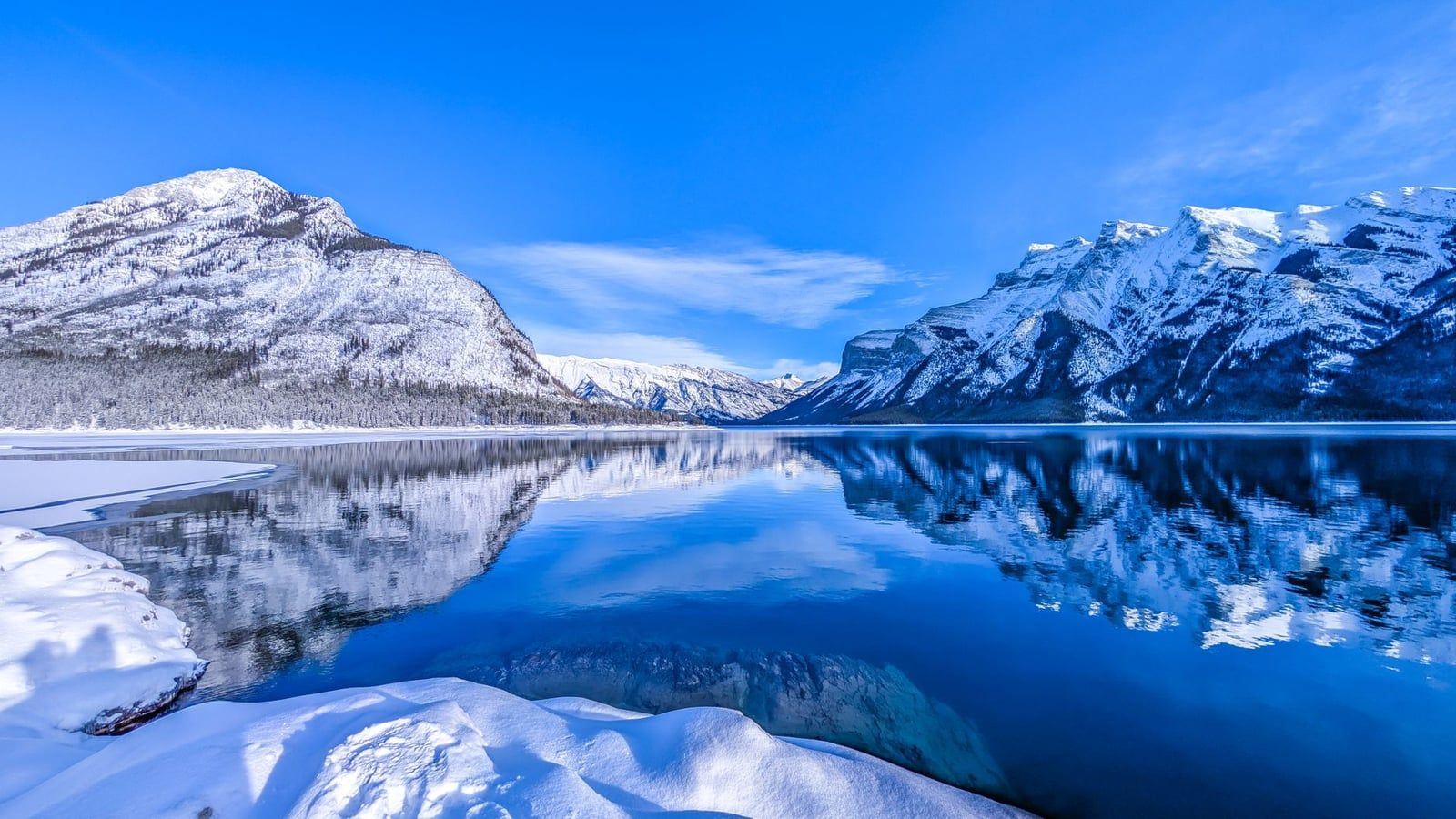
Lake Minnewanka is the park's longest lake and the most popular aurora spot for a reason: it's about a 10-minute drive from town, and the open water gives you sky in every direction. That popularity is also the downside, expect company on any night the forecast looks promising. Parking directly on the dam road isn't allowed; use the designated lots.
4. Castle Junction
Castle Junction sits roughly halfway between Banff and Lake Louise on the Bow Valley Parkway, about a 25-minute drive. The payoff is a north-facing river view just two minutes' walk from the car, with almost none of the Minnewanka crowd.
5. Peyto Lake
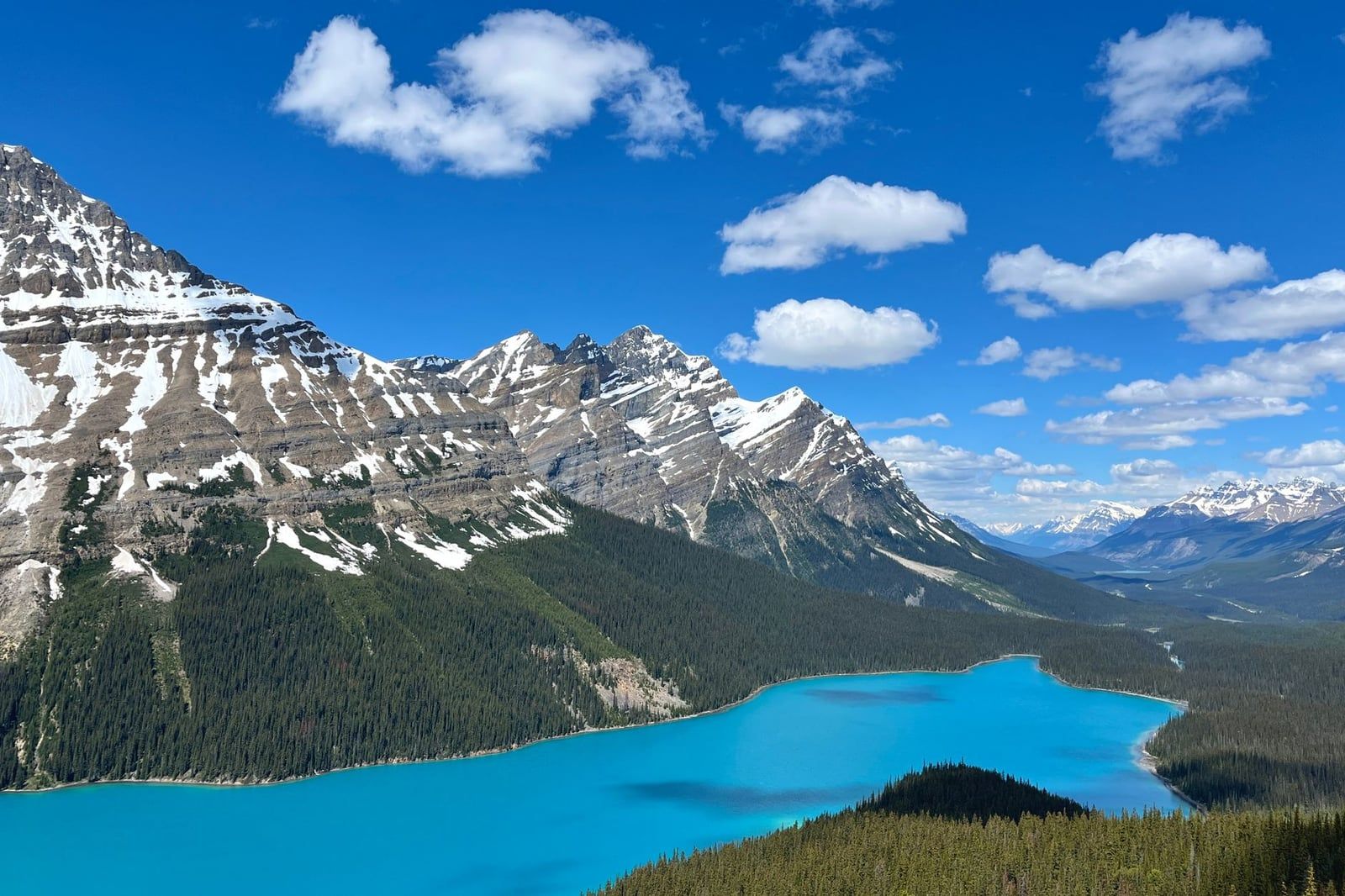
Peyto Lake's overlook faces northwest and sits just off the Icefields Parkway. It's a longer drive than the townsite spots, but the fox-head-shaped lake below adds a view worth the trip even if the sky stays quiet.
6. Bow Lake
Bow Lake is about 30 minutes from Lake Louise along Highway 93N, deep enough into the Icefields Parkway that light pollution isn't a factor. It's a good backup if Peyto's pullout is already full.
Without a car, Vermilion Lakes and the pedestrian bridges over the Bow River are your realistic options. Roam Transit's last buses typically stop around 11pm, so budget for a walk back to your hotel. Drivers chasing darker skies still further afield sometimes push on toward Canmore or Jasper National Park, reached via the Icefields Parkway route out of Banff, which holds one of the darkest designated sky preserves in the Rockies. Watch the road on any late drive; elk and deer are common on unlit stretches after dark, and our guide to Banff's wildlife covers what to do if you meet one.
| Spot | Direction Faced | Distance from Banff | Crowd Level | Car Needed |
|---|---|---|---|---|
| Vermilion Lakes | SE (1st pond), N (3rd pond) | ~5 min drive or walkable | Low-medium | No |
| Cascade Ponds | North | ~10 min drive | Low | Yes |
| Lake Minnewanka | Open, all directions | ~10 min drive | High | Yes |
| Castle Junction | North | ~25 min drive | Low | Yes |
| Peyto Lake | Northwest | ~45 min drive | Medium | Yes |
| Bow Lake | Open sky | ~1 hour drive | Low | Yes |
How to Predict a Show: KP Index, Forecast Tools, Moon Phase and Weather
The KP index measures geomagnetic activity on a scale from 0 to 9, the higher the number, the further south the aurora oval stretches. At Banff's latitude, you generally need a reading of KP5 or higher before the display becomes visible to the naked eye; KP6 and up is when it gets genuinely dramatic. Anything below KP4 usually means the show, if there is one, stays too far north to see from the Bow Valley.
Check before you drive, not after. AuroraWatch.ca, run by the University of Alberta, sends free red and yellow email alerts built around the Edmonton region that double as a solid proxy for Banff, Jasper, and Calgary. The Geophysical Institute at the University of Alaska Fairbanks and NOAA's Space Weather Prediction Center both publish forecasts covering all of North America, and the free SpaceWeatherLive app layers real-time KP readings, solar wind speed, and the aurora oval onto one screen. For boots-on-the-ground reports, the Alberta Aurora Chasers Facebook group posts sighting updates as they happen on active nights. If you'd rather check from the couch first, Sunshine Village's live webcam at the top of the Wawa chairlift shows current conditions before you commit to the drive.
A strong KP reading still needs help from the sky itself. A new moon, or one that's already set, keeps the aurora from washing out against moonlight, and cloud cover is the real deciding factor: a KP7 storm is invisible behind an overcast sky. Cloud in the Bow Valley can be patchy. If Banff townsite is socked in, driving out along the Icefields Parkway sometimes puts you under clear sky twenty minutes later.
What to Pack and Viewing Etiquette
- Warm layers, a toque, gloves, and insulated boots for standing still for hours.
- A headlamp with a red-light mode to protect your night vision.
- A camp chair and blanket; cold ground saps patience fast.
- A thermos of something hot, cocoa or coffee, to get through until 1am.
Buy supplies before you head out. Nesters Market and the IGA in Banff, or the Village Market in Lake Louise, are the last stops before the shops close for the night.
At popular spots like Minnewanka or Vermilion Lakes, keep headlights and headlamps off once you're parked, and stick to designated lots so you're not blocking the road for the next carload. Keep voices down; sound carries across still water at night, and everyone's there for the same reason. Above all, bring patience. A show can take three hours to build, or never show up at all, and that's the deal with chasing aurora anywhere.
Photographing the Aurora: Smartphone vs Camera Settings
A modern smartphone can capture a decent aurora photo if you set it up right. Switch to Night Mode and dial the timer to its longest setting, then manually set ISO to 800-1600 with a 5-10 second shutter speed if your phone allows manual control. Prop the phone against a rock or use a small tripod, any shake ruins a long exposure, and focus on a distant silhouette like a mountain ridge or treeline rather than letting the camera hunt for focus on empty sky.
A DSLR or mirrorless camera gives you more room to work with: a wide-open aperture, a high ISO, and a shutter speed around 15-30 seconds, focused manually to infinity. A tripod is non-negotiable, and a remote shutter or a two-second self-timer avoids the blur you get from pressing the button by hand. Fire off a few test shots as soon as you arrive, before anything's happening, so your settings are already dialed in when the sky actually moves.
Tours, Aurora-Friendly Hotels and Remote Cabins
Nobody runs a tour that guarantees you'll see the aurora, because nobody can; the forecast can flip within hours. What does exist are general stargazing tours that run year-round regardless of aurora activity, typically two to three hours long and priced around $150 CAD, with guides pointing out constellations and dark-sky highlights whether or not the lights cooperate. If you'd rather have a guide track the forecast and adjust your plans on short notice, a private tour gives you that flexibility.
A couple of properties have built their own workaround for the unpredictability. The Rimrock Resort keeps a KP meter in its lobby and offers an aurora wake-up call service for guests who'd rather sleep than stand outside on a quiet night. For something darker and quieter, the Bow Valley Parkway's remote cabins, Baker Creek Cabins, Castle Mountain Chalets, and Storm Mountain Cabins, sit well outside town with minimal light pollution of their own, making them a smart base if you're serious about your odds. Our guide to where to stay in Banff covers those options against the townsite hotels in more detail.
Frequently asked questions
Can you actually see the northern lights in Banff National Park?
Yes, it happens several times a year, mostly outside summer, but it's unpredictable. Banff generally needs a geomagnetic storm of KP5 or higher to produce a visible show at its latitude.
What is the best time of year to see the northern lights in Banff?
Late September through April is the main season, with December through February offering the longest, darkest nights and the best odds.
What time of night are the northern lights visible in Banff?
Most sightings occur between 10pm and 2am, though a strong storm can produce a visible display earlier or later.
Where is the best place to see the northern lights near Banff townsite?
Vermilion Lakes and Cascade Ponds are closest to town with low light pollution. Lake Minnewanka is the most popular option but gets crowded on any promising night.
Do I need a car to see the northern lights in Banff?
Most top spots, including Lake Minnewanka, Castle Junction, Peyto Lake, and Bow Lake, require driving. Without a car, Vermilion Lakes and the pedestrian bridges over the Bow River are walkable from town, though Roam Transit buses typically stop around 11pm.
How do I know when the northern lights will be visible in Banff?
Track the KP index through AuroraWatch.ca alerts, the SpaceWeatherLive app, NOAA and University of Alaska Fairbanks forecasts, and the Alberta Aurora Chasers Facebook group, then check moon phase and cloud cover before heading out.
Can you see the northern lights in Banff in summer?
It's possible but unlikely, since summer nights are short and never fully dark. If it appears at all, expect it around 2 or 3am, and it's not worth planning a trip around.
Is there a northern lights tour in Banff?
No tour guarantees an aurora sighting since they're too unpredictable, but general stargazing tours run year-round for roughly $100-150 CAD over two to three hours, and some hotels, like the Rimrock Resort, offer an aurora wake-up call service.