About All Tours Hiking ToursFrom Calgary ToursWildlife ToursBig Canoe ToursPrivate ToursStargazing Tours Directions Hours & Fees Guides
Find Tours 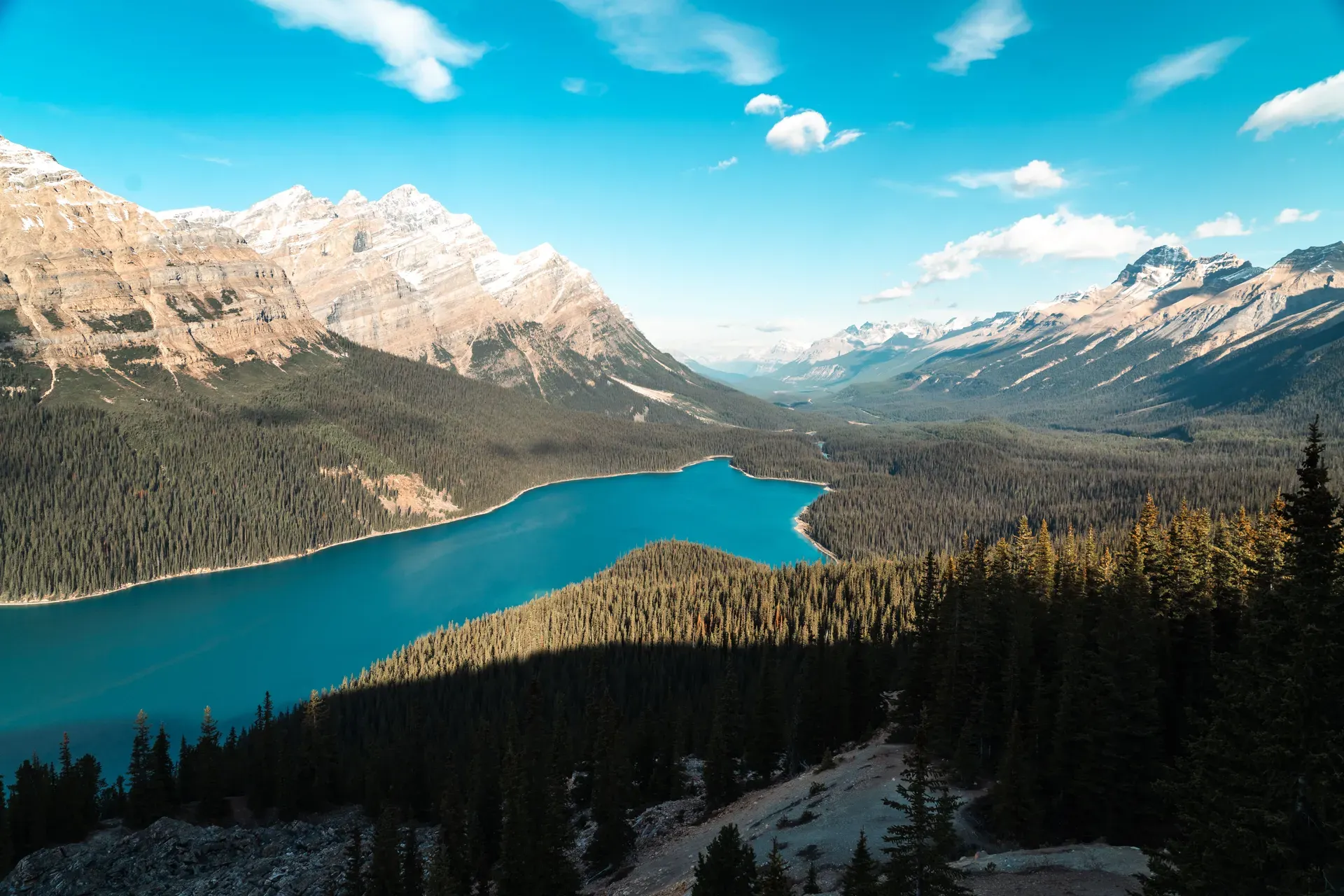
Banff National Park protects 6,641 square kilometres of glaciated peaks and coniferous forests in the Canadian Rockies. Established in 1885, Canada's oldest national park anchors a massive UNESCO World Heritage site and draws over 4.5 million visitors a year.
Banff National Park covers 6,641 square kilometres of the eastern Canadian Rockies. It sits roughly 110 to 180 kilometres west of Calgary, anchored by the Bow River valley and the townsite of Banff. The terrain consists of sedimentary rock carved by Quaternary glaciation into cirques, hanging valleys, moraines, and U-shaped basins. Glacial meltwater feeds high-alpine lakes like Lake Louise and Moraine Lake, giving them a distinct turquoise color from suspended rock flour. The park borders Yoho National Park and provincial forests to the west, Kootenay National Park to the south, and Kananaskis Country to the southeast.
Most visitors spend two to four days here. They walk the flat, paved Lakeshore Trail at Lake Louise, drive the Icefields Parkway toward Jasper, and ride the gondola up Sulphur Mountain. A full exploration of the backcountry and the northern icefields takes seven to ten days. The park is open 24 hours a day, year-round (though visitor centre hours shrink in winter). Summer brings full access to high-elevation trails and the longest daylight hours. It also brings gridlock. Parking lots at major lakes cost $42.00 per day and fill within an hour of sunrise in July and August. You'll need to book Parks Canada shuttles weeks in advance to reach Moraine Lake, as the access road is permanently closed to personal vehicles.
Winter shifts the focus to skiing at Sunshine Village, Lake Louise, and Mt. Norquay. April and November are the low points. High trails remain buried in snow, lower paths turn to mud, and facilities shut down. Skip these months if you want to hike. For the best balance of weather and access, target September. The crowds thin out, and the alpine larches turn gold around Larch Valley. Buy your $12.25 daily park pass online before you arrive to skip the gate queues.
Three railway workers found hot springs on the lower slopes of Sulphur Mountain in 1883. They were laying track for the Canadian Pacific Railway through the Bow Valley. Competing claims over commercial rights to the water quickly followed. To settle the dispute, Prime Minister Sir John A. Macdonald's government intervened. On November 25, 1885, the government set aside a 26-square-kilometre reserve around the springs. They called it the Banff Hot Springs Reserve.
This small protected zone established the template for Canada's national park system. Two years later, the Rocky Mountains Park Act of June 23, 1887, expanded the boundaries to over 670 square kilometres. The government named it Rocky Mountains Park. It was Canada's first national park and the third in the world. The Canadian Pacific Railway immediately recognized the financial potential of the area. They built the Banff Springs Hotel in 1888. The massive timber structure was designed to draw wealthy international tourists to the remote wilderness, generating passenger traffic for the new transcontinental rail line.
The park took its current name, Banff National Park, in 1930 under the National Parks Act. Boundaries shifted several times over the decades before settling at the current 6,641 square kilometres. As automobile travel replaced rail tourism in the mid-20th century, the government built the Icefields Parkway. This 230-kilometre highway connected Lake Louise to Jasper National Park, opening the Columbia Icefield to vehicle traffic.
Today, the park handles a massive volume of human traffic. Visitation hit a record 4.515 million in 2025. This density forces strict management of the physical environment. Drones are banned outright, with fines reaching $25,000. Campfires require permits and designated metal rings. To see the original hot springs that started the park, go to the Banff Upper Hot Springs facility. Go early in the morning. The pools get crowded by noon, and the water temperature sits at a heavy 38°C. Submersible wheelchairs are available for barrier-free access to the mineral-rich water.
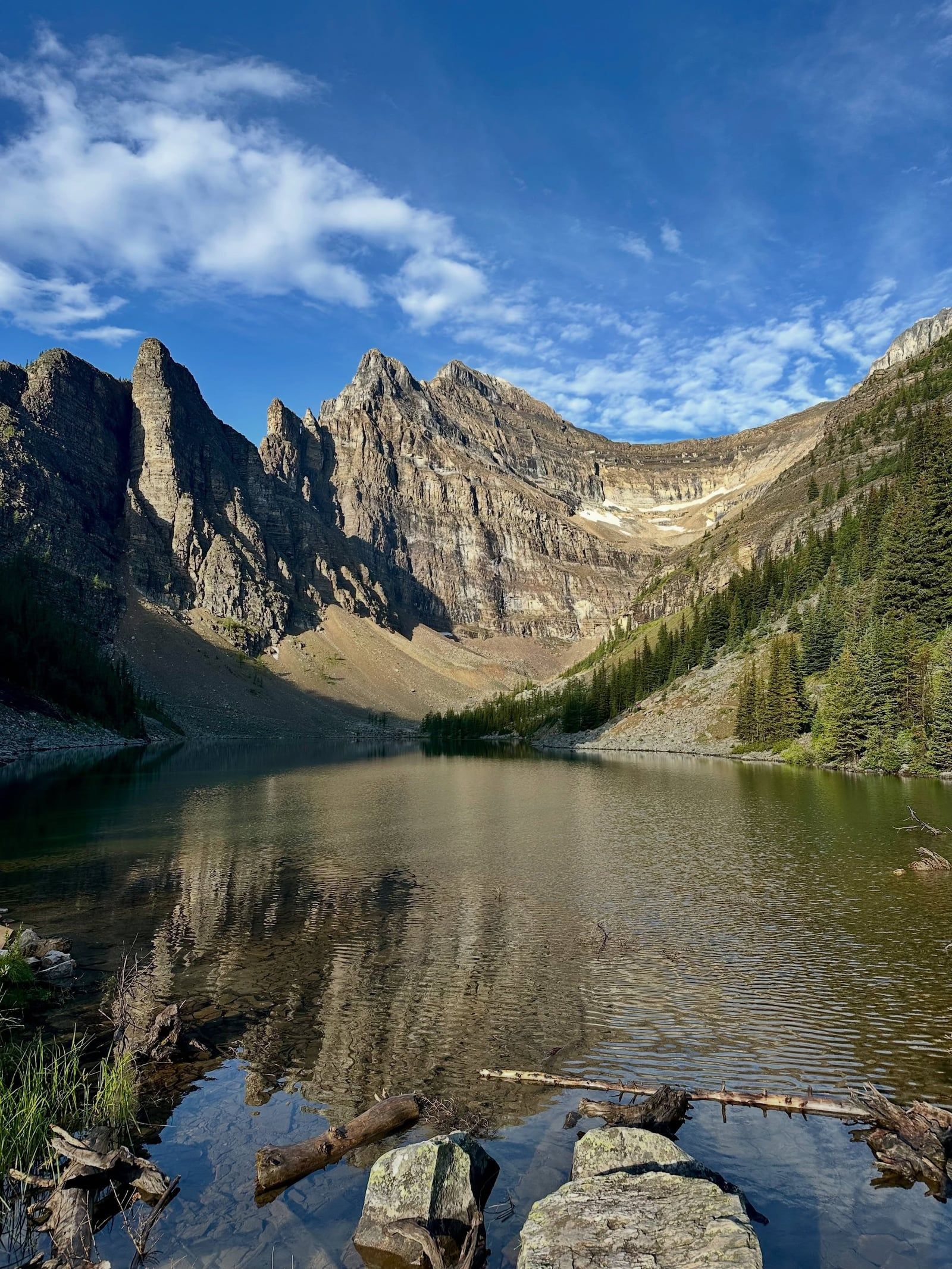
The park's topography runs from 1,400-metre valley bottoms to the 3,612-metre summit of Mount Forbes. Mount Assiniboine reaches 3,618 metres, but it straddles the southern boundary in adjacent provincial park land. Sedimentary rock formations—limestone, shale, and quartzite—date from the Precambrian to the Jurassic periods. Glaciers carved these rocks into sharp arêtes and deep U-shaped valleys during the Quaternary period. The Columbia Icefield, accessed via Highway 93N, feeds the Athabasca Glacier. Visitors can walk directly onto the toe of this retreating ice mass or ride massive Ice Explorer vehicles onto the surface. The wind coming off the glacier drops the ambient temperature by ten degrees, even in mid-July.
Water defines the lower elevations. Lake Minnewanka stretches 21 kilometres, making it the longest lake in the park. Bighorn sheep frequently block the loop road near its western shore. Further north, Johnston Canyon cuts through limestone cliffs 25 kilometres northwest of Banff. A steel catwalk is bolted directly into the canyon wall. It suspends hikers over the rushing creek, leading 1.1 kilometres to the Lower Falls and 2.7 kilometres to the Upper Falls. The metal grates vibrate underfoot when the water runs high in June. An optional extension leads 5.8 kilometres in to the cold-water Ink Pots springs.
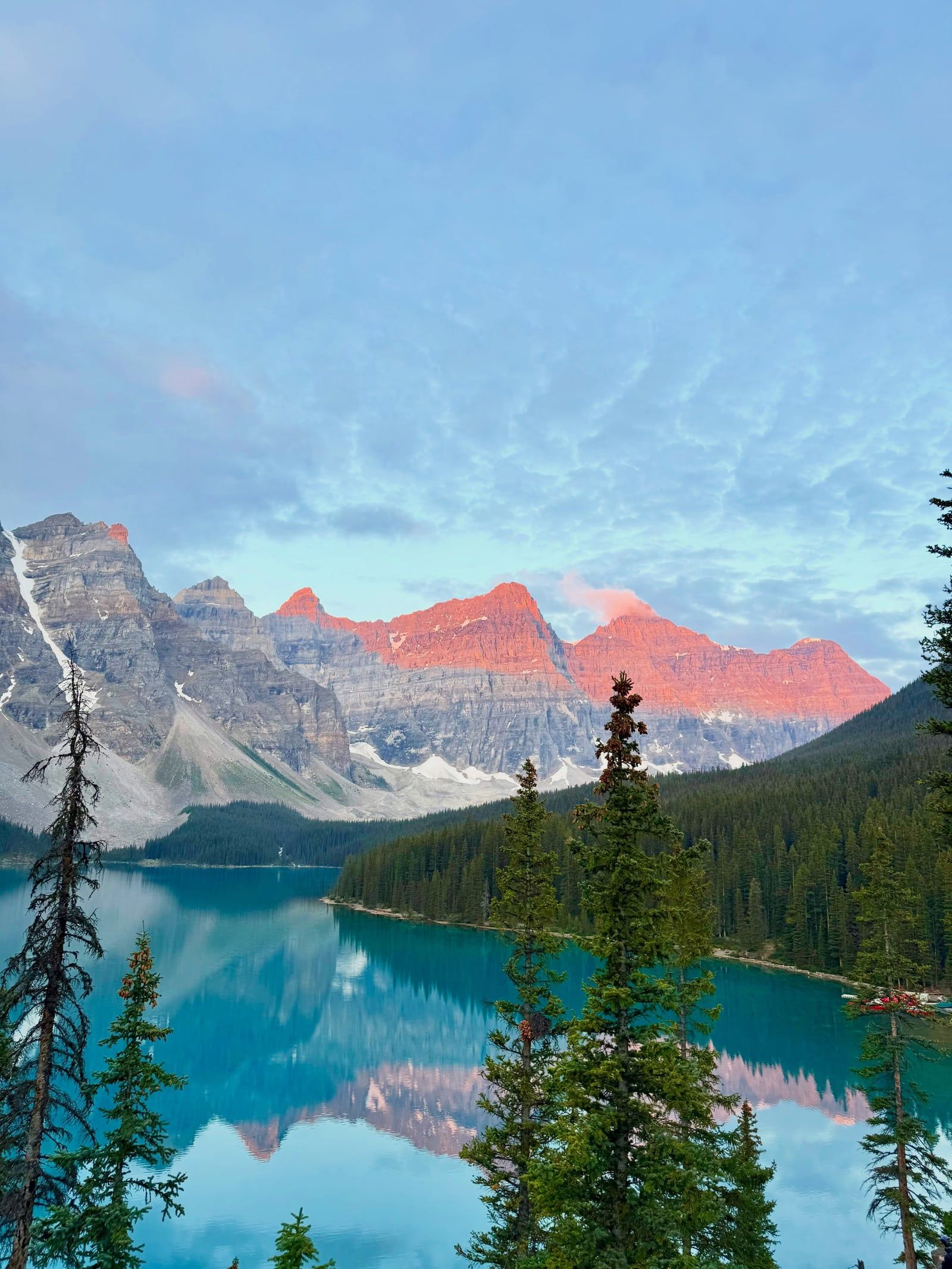
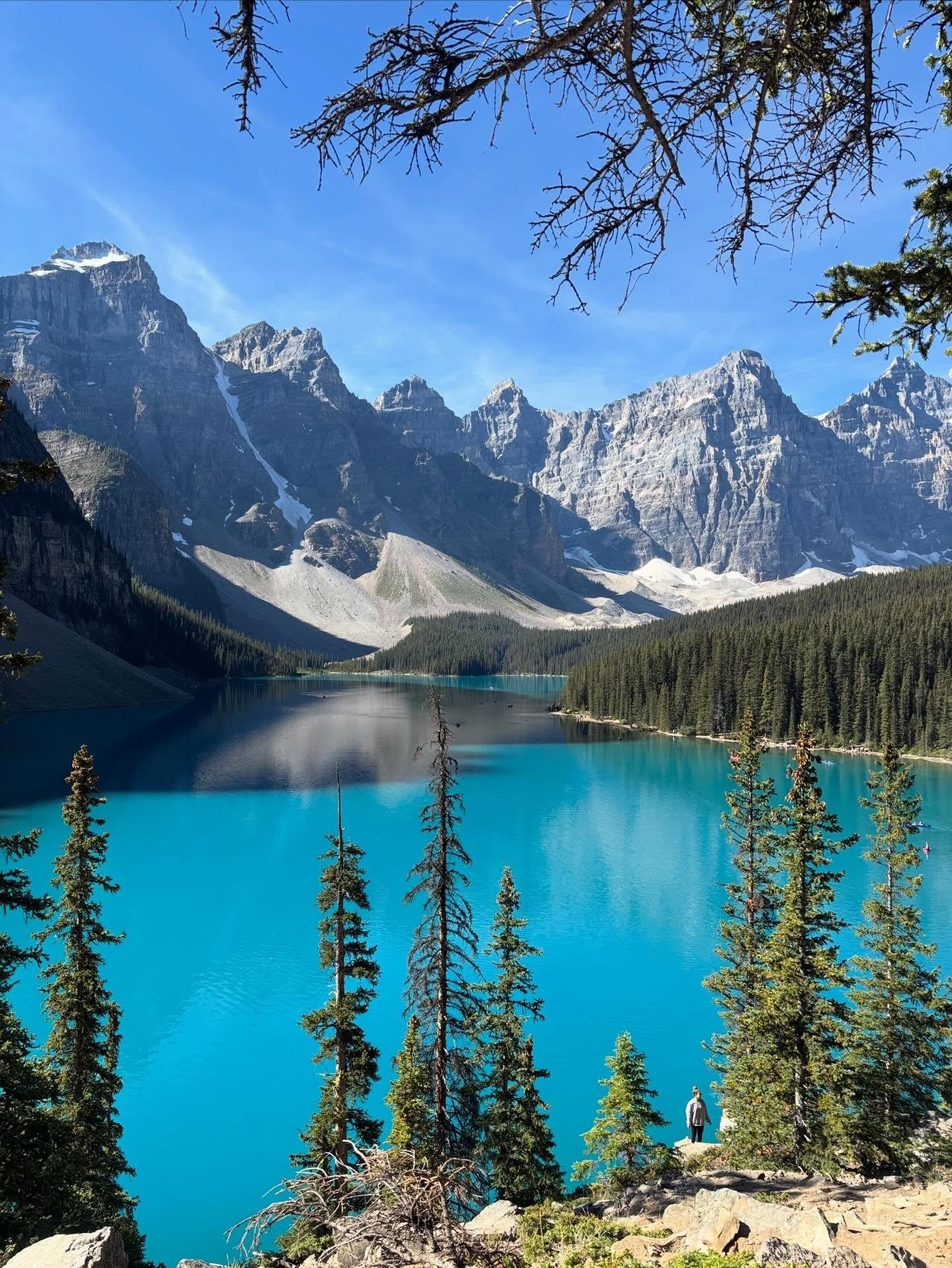
Lake Louise and Moraine Lake sit at 1,750 and 1,884 metres, respectively. Their water stays near freezing year-round. Moraine Lake occupies the Valley of the Ten Peaks, backed by a wall of rock faces that hold snow through August. The best view requires a short, steep climb up the Rockpile Trail. The path consists of uneven stone steps. Wear stiff-soled boots, as the quartzite rocks are sharp and slippery after rain. If you want a quieter alternative, drive further up the Icefields Parkway to Bow Lake or Peyto Lake. Peyto Lake features a fox-head-shaped overlook and a handicap-accessible viewing section.
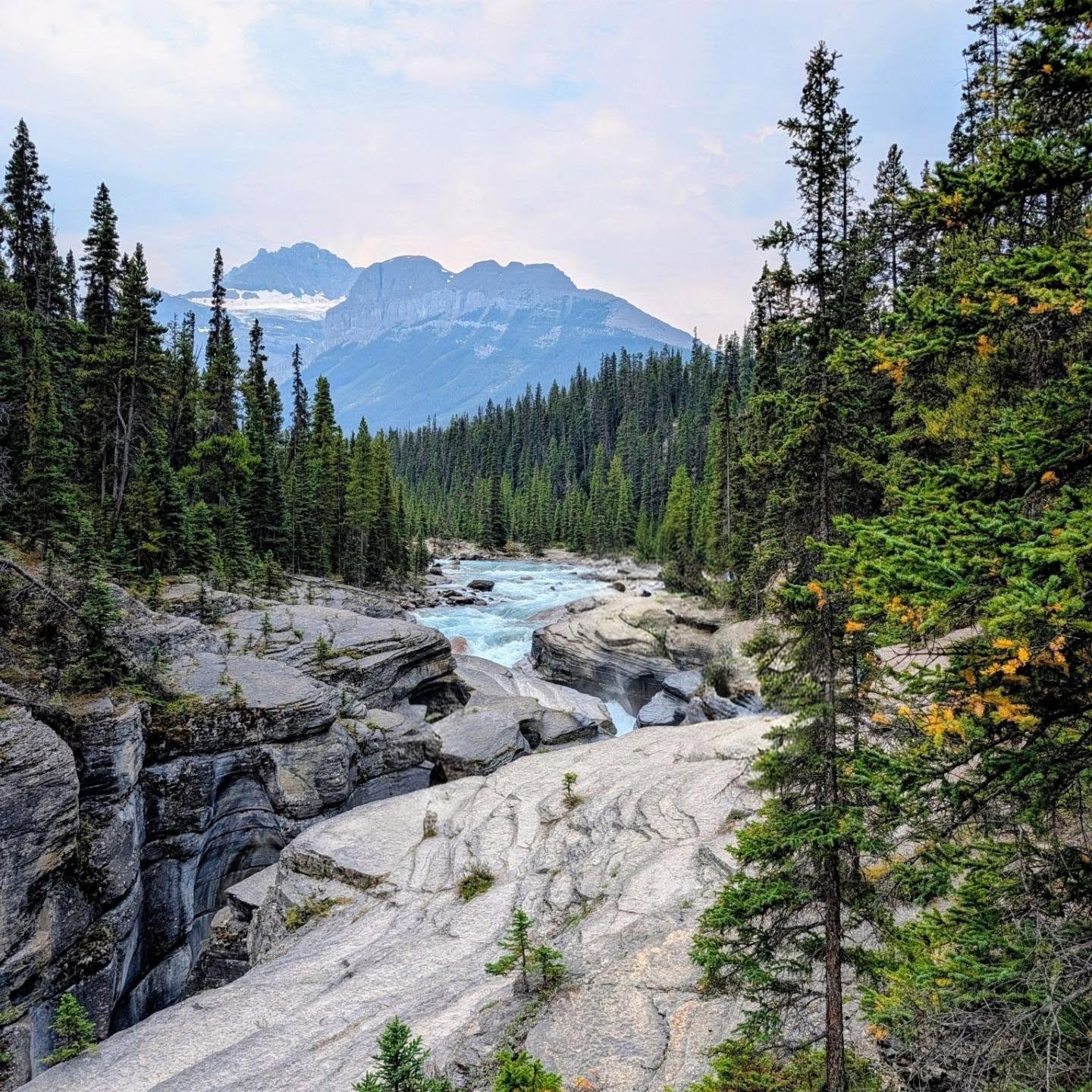
Banff operates as a dual entity: a protected wilderness and a heavily developed commercial townsite. The Town of Banff holds 8,865 permanent residents inside the park boundaries. It functions as the administrative and cultural center of the Canadian Rockies. The Banff Park Museum National Historic Site sits downtown in a 1903 log building. It's western Canada's oldest natural history museum. The interior smells of old pine and dust, housing over 5,000 vintage taxidermy specimens of regional wildlife.
The park's visual identity is tied to early Canadian currency and marketing. The view of Moraine Lake from the Rockpile was printed on the back of the Canadian twenty-dollar bill issued between 1969 and 1979. Railway posters from the 1920s established the image of the Canadian Rockies in Europe, using paintings of the Banff Springs Hotel and Lake Louise.
Today, the park anchors a massive UNESCO World Heritage Site shared with Jasper, Kootenay, and Yoho national parks. The designation recognizes the area's mountain peaks, geology, and Burgess Shale fossil beds in neighboring Yoho. For visitors, the townsite provides a necessary base camp. Eat and buy supplies in Banff or Canmore. Gas and groceries cost significantly more once you drive north onto the Icefields Parkway, and cell coverage vanishes completely along most of the route.
Operating a recreational drone anywhere in the park can result in a maximum penalty of CA$25,000.
The iconic perspective of Moraine Lake from the Rockpile Trail was featured on the Canadian $20 bill from 1969 to 1979.
The park exists because three Canadian Pacific Railway workers stumbled upon hot springs on Sulphur Mountain in 1883.
Mount Forbes is the tallest mountain entirely within the park boundaries, reaching an elevation of 3,612 metres.
The 1903 Banff Park Museum houses over 5,000 vintage taxidermy specimens, making it western Canada's oldest natural history museum.
Moraine Lake Road is permanently closed to personal vehicles year-round, requiring visitors to use shuttles or transit.
Lake Minnewanka stretches approximately 21 kilometres, making it the longest body of water in the park.
Yes, anyone stopping within Banff National Park must display a valid park pass on their dashboard. Daily adult passes cost $12.25, and an annual Discovery Pass costs $83.50. You can buy these at park gates, Visitor Centres, or online before your trip.
No. Moraine Lake Road is closed to personal vehicles year-round. Access from June to mid-October requires a Parks Canada shuttle reservation, Roam Transit, or a licensed commercial operator. The road shuts down entirely in winter and is track-set for cross-country skiing.
June through September provides the warmest weather and full access to high-elevation trails. Late September brings golden larch colors to the alpine zones with slightly fewer crowds. Winter is strictly for skiing at resorts like Lake Louise and Sunshine Village, while April and November are muddy, cold shoulder seasons with closed facilities.
Recreational drone use is strictly prohibited throughout Banff and all other Parks Canada locations. Violators face law enforcement action and fines up to $25,000. Commercial drone operators must secure both a Commercial Film Permit and a Restricted Activity Permit from the park Superintendent.
Several shuttle companies run direct coaches from Calgary International Airport to Banff hotels. The trip takes roughly 1.5 to 2 hours and costs between $13 and $86 one way, depending on the operator. FlixBus also operates a daily low-cost route between Calgary and the park.
The park remains open 24 hours a day, year-round. Visitor Centre hours shrink during the winter months, and several secondary roads close due to avalanche risk. The main Trans-Canada Highway stays plowed, allowing access to the townsite and ski resorts.
Do not approach or feed the animal. Parks Canada requires visitors to travel in groups, make noise on trails, and carry bear spray in an accessible spot. Report any bear, cougar, or wolf sightings to Banff Dispatch at 403-762-1470.
Backcountry camping requires a Wilderness Pass, which costs $15.00 per person per night. You must book this through the Parks Canada reservation system. Campfires are banned in the backcountry unless you are at a designated site with metal fire rings and possess a valid fire permit.
The park received 4.515 million visitors in 2025. This marked the highest visitation on record, breaking the previous high of 4.28 million set in 2023/24. Parks Canada tracks these numbers on an April-to-March fiscal year schedule.
Yes. Parks Canada shuttle reservations for Lake Louise and Moraine Lake sell out weeks in advance during the summer. Booking online costs a $3.50 reservation fee, which is cheaper than the $5.50 phone booking fee. Parking lots at the lakeshore fill within an hour of sunrise, making the shuttle the only reliable access method.
Browse verified tours with free cancellation and instant confirmation.
Find Tours