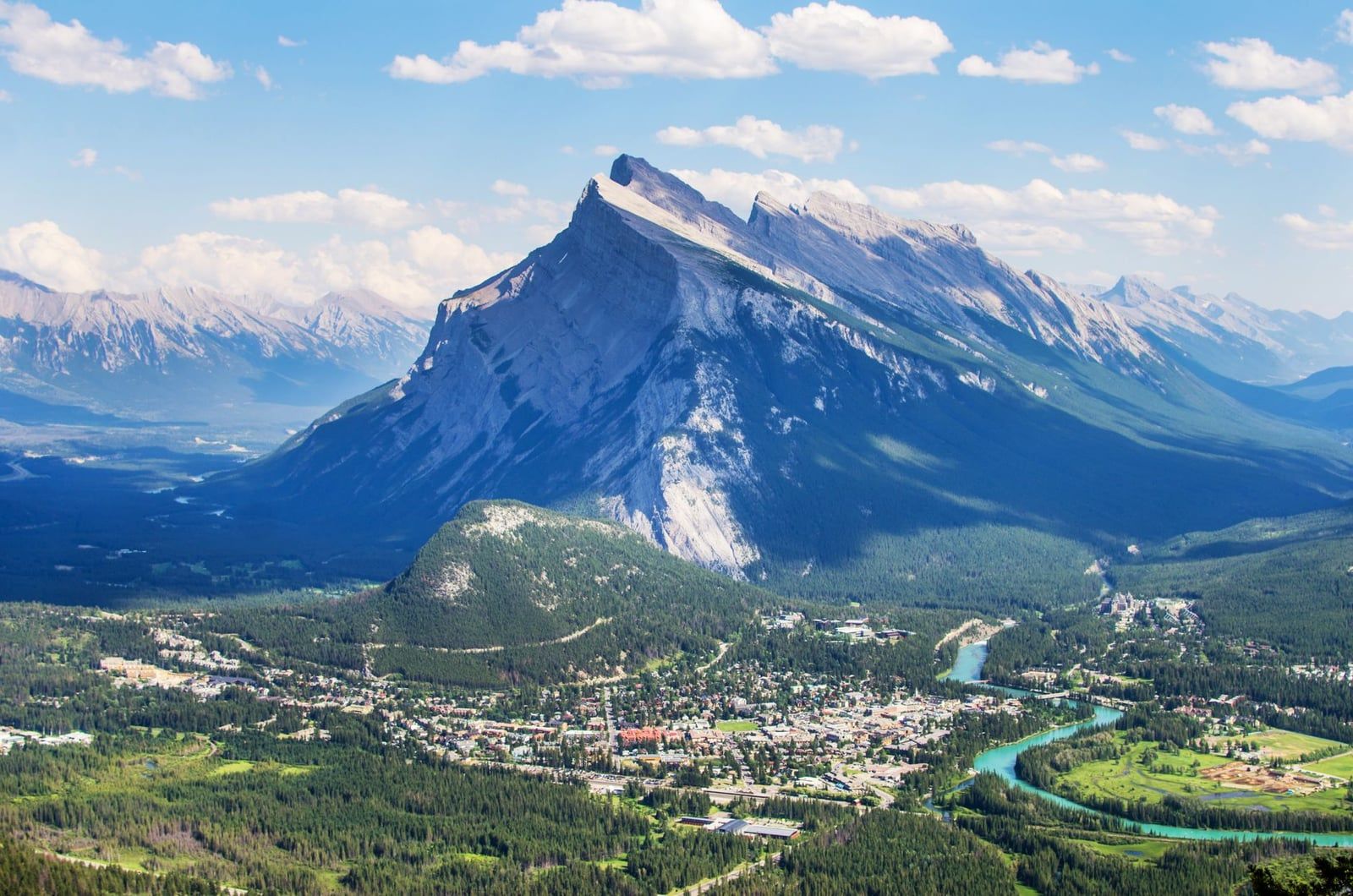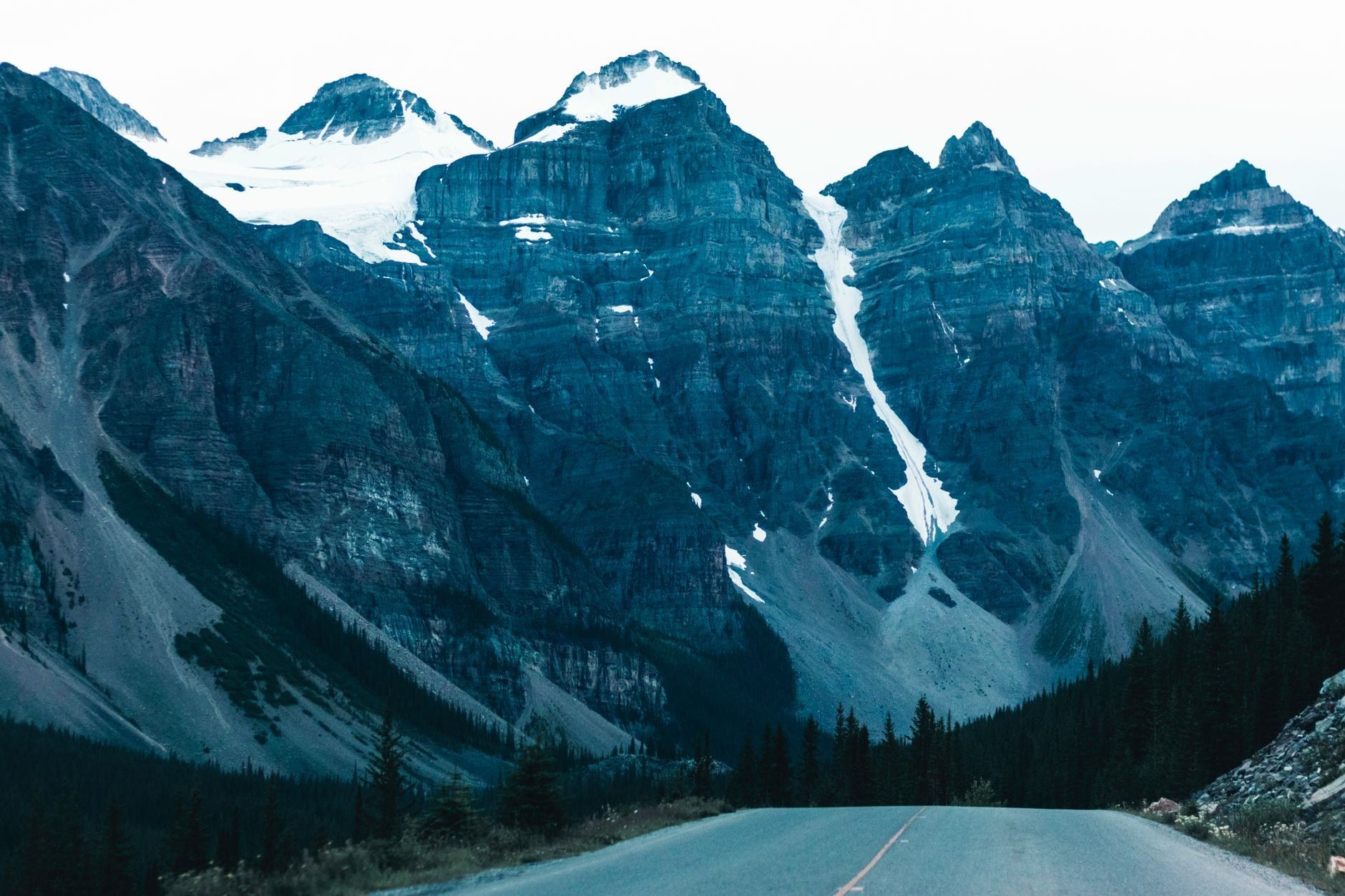
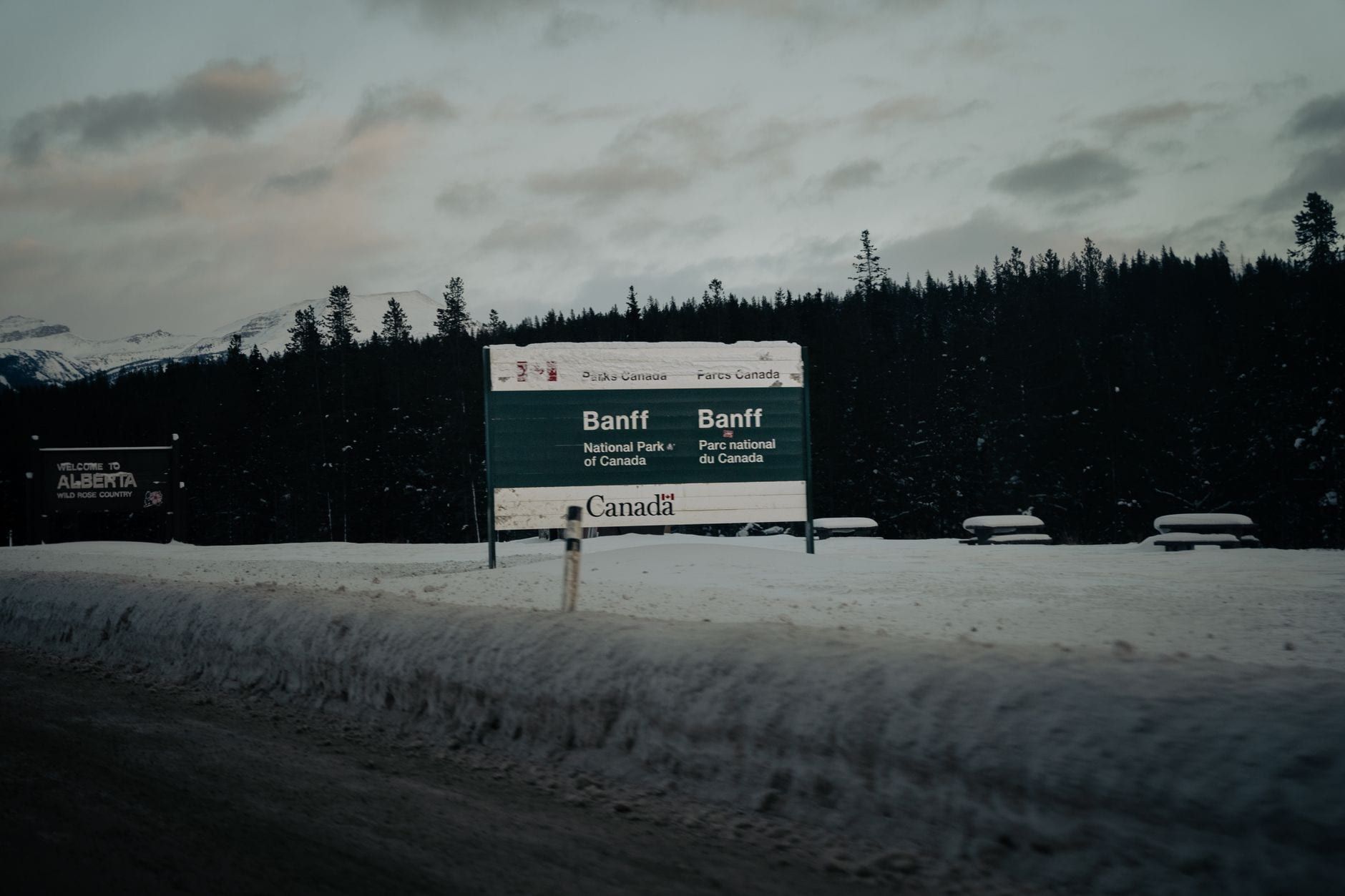
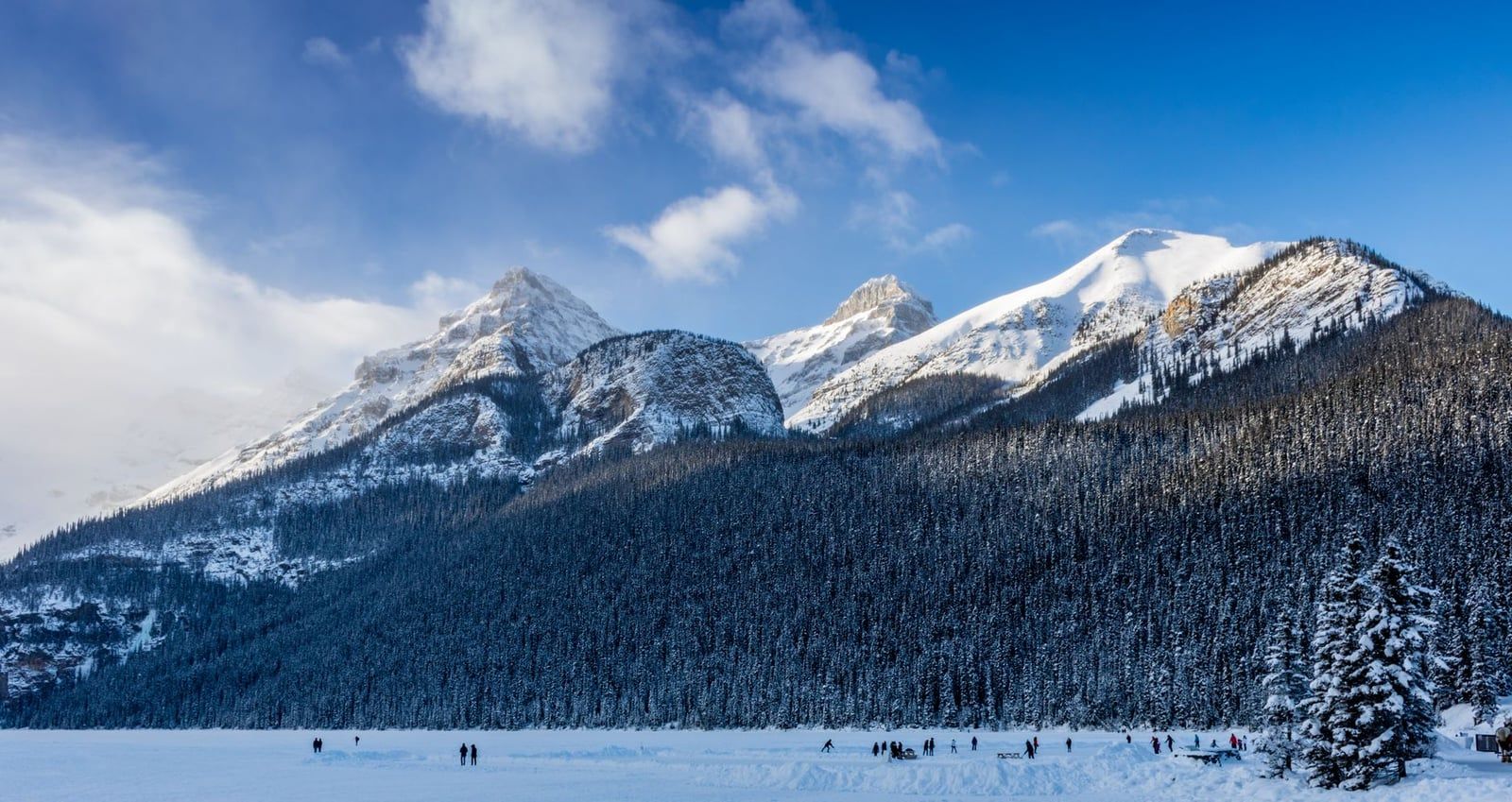
Snow changes Banff National Park completely. Lake Louise freezes into a lakeside skating rink ringed by peaks, Johnston Canyon's waterfalls lock into blue ice columns you can walk right up to, and the summer crush at Moraine Lake Road disappears under a groomed ski track. Three resorts inside the park run full seasons from November into spring, and hotel rates in Banff townsite often drop well below July prices. Read up on the park's history and year-round highlights before you go, then use this guide to sort what's genuinely worth doing between December and March.
Expect real cold, short days, and a handful of closures. None of it needs to ruin the trip if you plan around it.
Is Banff National Park Worth Visiting in Winter?
Yes, for travelers who want quiet trails, frozen lakes, and a full ski season instead of shorts weather. Far fewer visitors show up between December and March than during the July-August peak, when Lake Louise and Moraine Lake parking lots fill within an hour of sunrise. Hotel rates in Banff townsite fall well below summer rack rates, and restaurants that need reservations in August will seat walk-ins on a Tuesday night in February. Ice takes over the landscape: Lake Minnewanka, Two Jack Lake, and Johnston Canyon's waterfalls all freeze solid enough to walk on or skate across, and three resorts run lift-served skiing most of the season.
The trade-offs are real, though. January days average only about 8.1 hours of daylight, climbing to roughly 10 hours by February, so sightseeing windows stay tight. Cold snaps can push temperatures down to around -30°C for a week at a stretch, and Moraine Lake Road closes to vehicles entirely for the season, cutting off the drive-up view once printed on the old Canadian $20 bill. Hiking shrinks to a handful of low-elevation trails instead of the full alpine network.
Skiers, photographers, and couples chasing a quiet frozen-lake photo without a crowd of tripods will love it here. Families wanting the turquoise-water postcard shot of Lake Louise, or hikers set on the high alpine trails, are better off saving the trip for July or August — check our season-by-season breakdown if you're still weighing dates.
When Is Winter in Banff, and What's the Weather Like?
Banff & Lake Louise Tourism marks winter as November through March, though the shift is gradual. November still swings between about -8°C and 1°C, while by December most lakes are freezing over and snow has settled into the valley. January is the coldest month on record, averaging a daily high of just -5.3°C and a low of -14.9°C, with about 38.2 cm of snow falling that month. February eases slightly to a high of 0.1°C and a low of -11.3°C, and March starts warming in earnest, with average highs reaching 3.8°C as the sun climbs higher.
| Month | Avg. High | Avg. Low |
|---|---|---|
| November | 1°C | -8°C |
| January | -5.3°C | -14.9°C |
| February | 0.1°C | -11.3°C |
| March | 3.8°C | – |
Numbers on paper don't capture what a cold snap feels like. Temperatures can plunge to roughly -30°C for about a week at a time, usually in late January or February, when exposed skin can develop frostbite within minutes. Just as often, a chinook wind rolls in off the mountains and pushes the mercury up 15 or 20 degrees within a day, turning packed snow to slush. Layer for both extremes rather than trusting the seasonal average.
Daylight is the other constraint. January's short 8.1-hour days stretch to roughly 10 hours by February, so plan gondola rides, lake walks, and drives for the middle of the day and keep a headlamp in the car for anything that runs late.
What's Open and What's Closed in Winter
The park itself never closes. Banff National Park operates 24 hours a day, year-round, and the townsite, Banff Gondola, Upper Hot Springs, and Cave and Basin National Historic Site all stay open through winter, alongside the shops and restaurants on Banff Avenue. Check current opening hours and entry fees before you go, since visitor centre hours shrink outside summer.
Moraine Lake is the one that trips people up. The access road is closed to personal vehicles year-round, and once winter sets in, Parks Canada shuts it entirely and grooms it as a ski and snowshoe track rather than running any shuttle. Reaching the lake in winter means skiing or snowshoeing in under your own power — a serious backcountry outing, not a casual walk, and only for travelers with the gear and experience to handle avalanche terrain.
A handful of warm-weather-only attractions shut down completely for the season: the Lake Louise Summer Gondola, the Mt. Norquay summer chairlift, and the Columbia Icefield Skywalk and Glacier Explorer all close and won't reopen until spring.
The Icefields Parkway itself stays open, but don't expect any services along it — no fuel, no food, no cell signal between Lake Louise and the Columbia Icefield. Snow tires marked M+S or with the snowflake symbol are mandatory on the parkway from November 1 to April 1, and rangers can ticket vehicles running summer tires.
Best Things to Do in Banff in Winter
Winter activity in Banff splits roughly into three categories: lift-served skiing, human-powered snow travel like skating and snowshoeing, and low-effort sightseeing you can do in regular boots. Here's where to spend the time, organized by the kind of day you want.
Skiing and Snowboarding at SkiBig3
SkiBig3 covers the three resorts inside the park, and they're different enough to justify visiting more than one. Lake Louise Ski Resort has 145 runs across 4,200 acres spread over four faces of the mountain, with terrain gentle enough for beginners on one side and long cruisers on another. Banff Sunshine Village matches it with 145 runs over 3,300 acres straddling the Continental Divide, plus Delirium Dive, a permit-only bowl for experts only. Mt. Norquay is the smallest of the three at 60 runs and 72 acres, but it's the only one with night skiing and sits just 10 minutes from Banff townsite — the pick for a half-day session or a family with young kids.
| Resort | Terrain | Best For |
|---|---|---|
| Lake Louise | 145 runs, 4,200 acres | Mixed ability, long cruising runs |
| Sunshine Village | 145 runs, 3,300 acres, incl. Delirium Dive | Experts, reliable natural snow |
| Mt. Norquay | 60 runs, 72 acres, night skiing | Beginners, families, quick trips from town |
Ice Skating on Lake Louise and Wild Ice
The rink on Lake Louise is the postcard version. The Fairmont Chateau Lake Louise resurfaces it nightly, so it's reliably skatable all winter regardless of recent snowfall. Skate rentals run about $22 CAD for two hours at the Chateau, or from $15 CAD a day from shops in Banff townsite. For something wilder, natural ice on Lake Minnewanka, Two Jack Lake, and Johnson Lake lets you skate for kilometres with mountains on every side and no boards or Zamboni in sight.
Parks Canada doesn't monitor or mark natural ice, so check thickness yourself before heading out: 15 cm minimum for one skater alone, 20 cm for a group. Conditions change fast after a warm spell, so test near the shore first.
Winter Hiking and Snowshoeing
Winter hiking in Banff means a short list of low-elevation trails rather than the summer's full network. Tunnel Mountain, the Lake Louise lakeshore, and the paved lower section of Johnston Canyon all stay manageable with ice cleats strapped to regular boots. Snowshoes open up more ground, and packed routes around the townsite and the Bow Valley let you get off pavement without wandering into avalanche exposure. Guided snowshoe outings are worth booking if you don't know the terrain.
Anything above treeline, or off a marked and packed trail, should be treated as avalanche terrain. See the safety section below before exploring further afield.
Frozen Waterfalls and Ice Walks
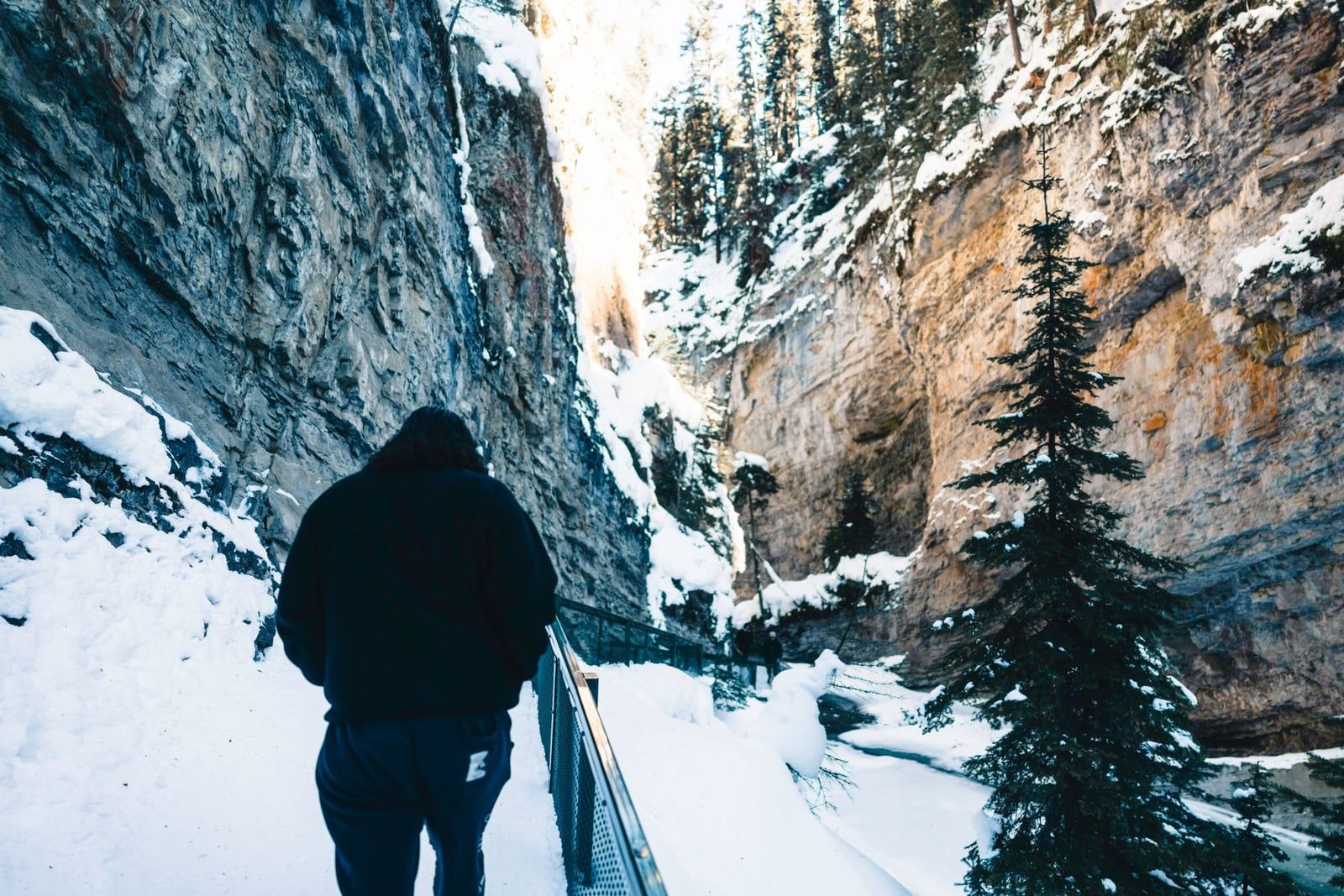
Johnston Canyon's Lower Falls (1.1 km in) and Upper Falls (2.7 km) freeze into towers of blue and white ice, and the canyon's cliffside catwalk stays open all winter with ice cleats recommended for the slick sections. Marble Canyon, over in neighboring Kootenay National Park, freezes into a similarly dramatic ice walk with far fewer visitors on the boardwalk. Both are best early morning, when the ice still catches low winter light and the trail hasn't turned to slush underfoot.
Scenic Drives on the Icefields and Bow Valley Parkways
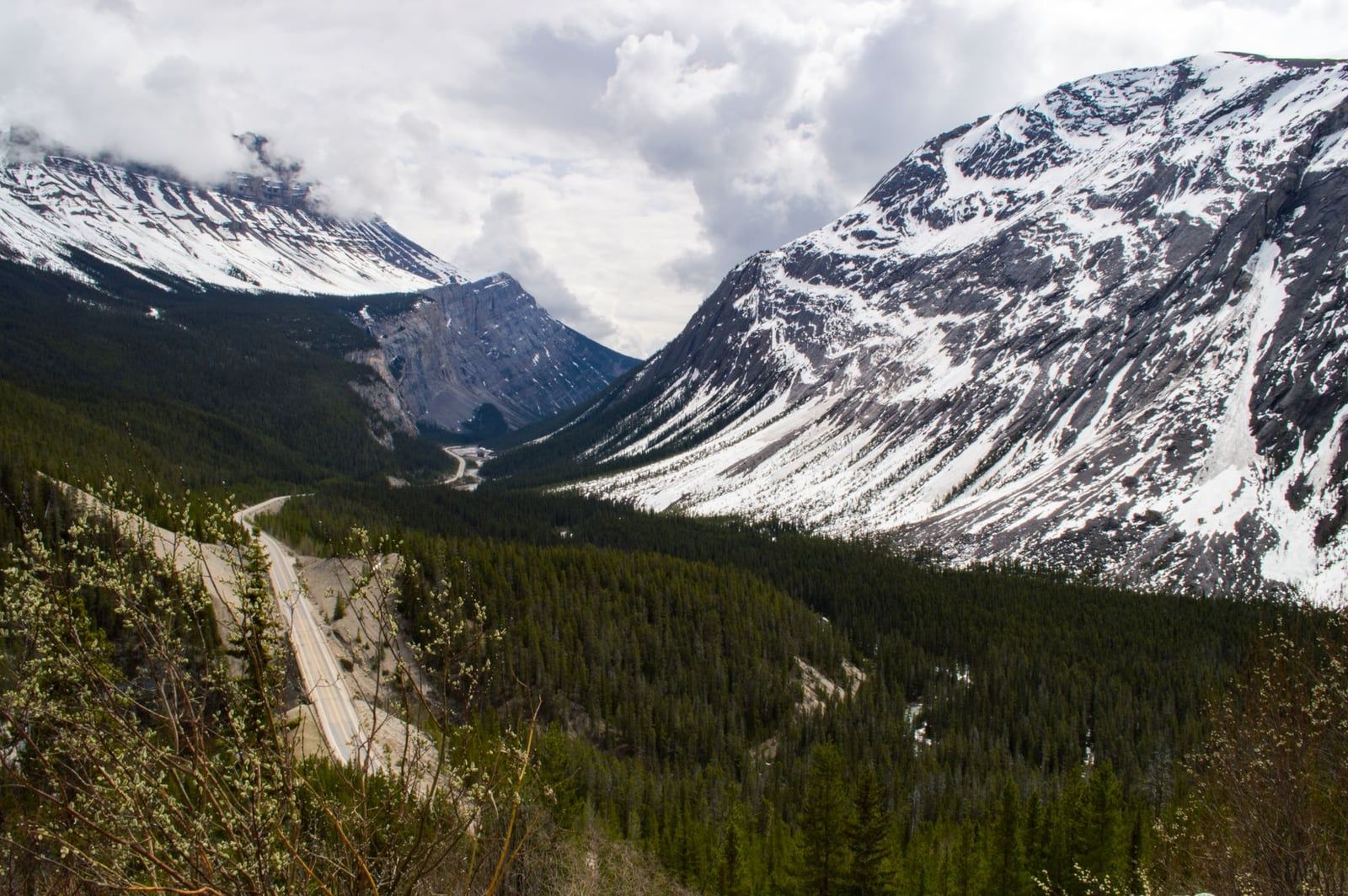
Bow Lake and Peyto Lake, both on the Icefields Parkway, freeze into white sheets ringed by the peaks that make the drive worth doing even with no green water to look at. The Bow Valley Parkway, the slower back road between Banff and Lake Louise, adds a photo stop at Morant's Curve without the parkway's near-total lack of cell signal. Fill the tank in Banff or Lake Louise before either drive — there's no gas and no reception along most of the route. Long winter nights also make this stretch of highway one of the park's better spots for dark skies; see our guide to northern lights in Banff for timing.
Banff Gondola and Upper Hot Springs
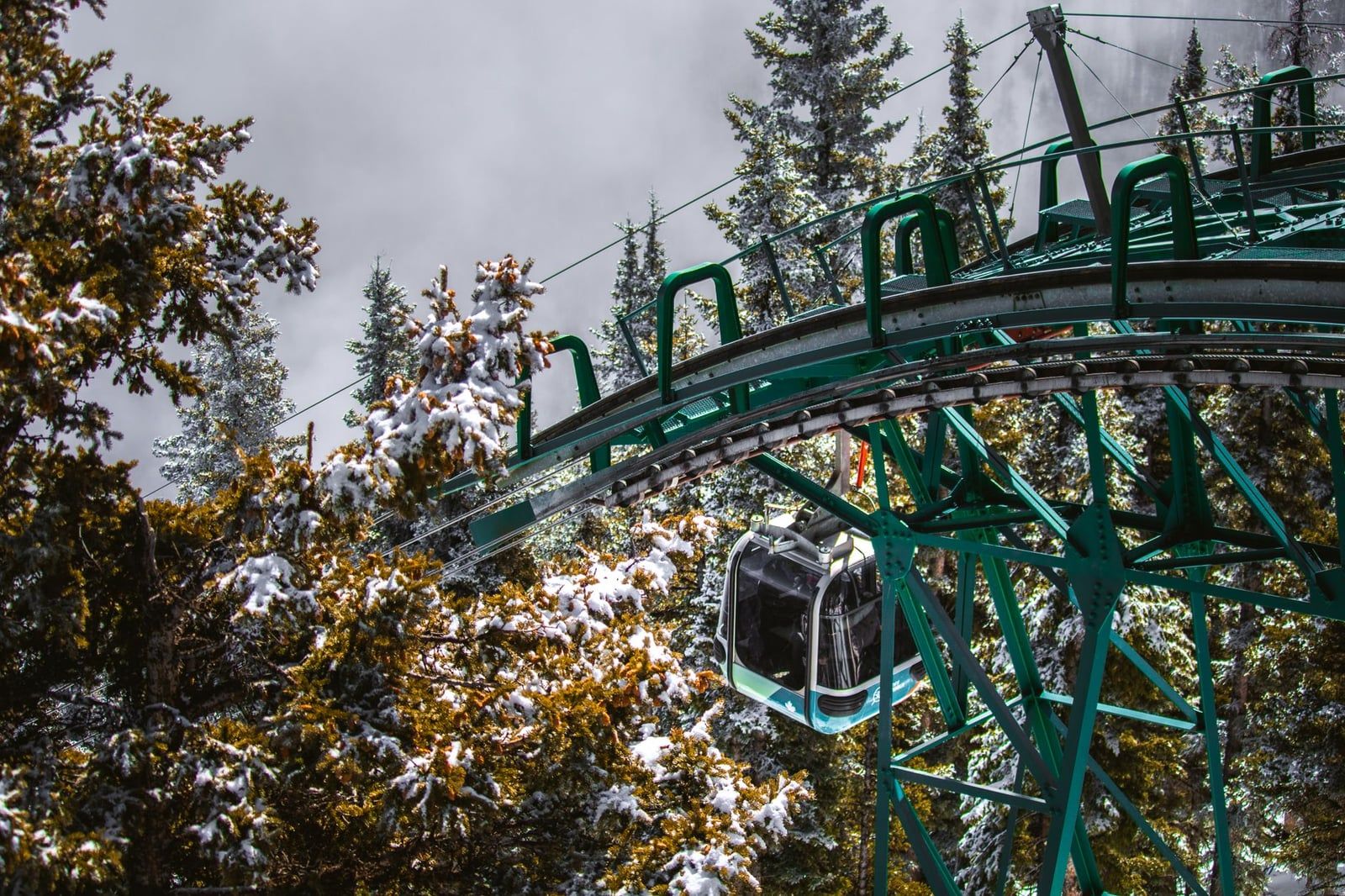
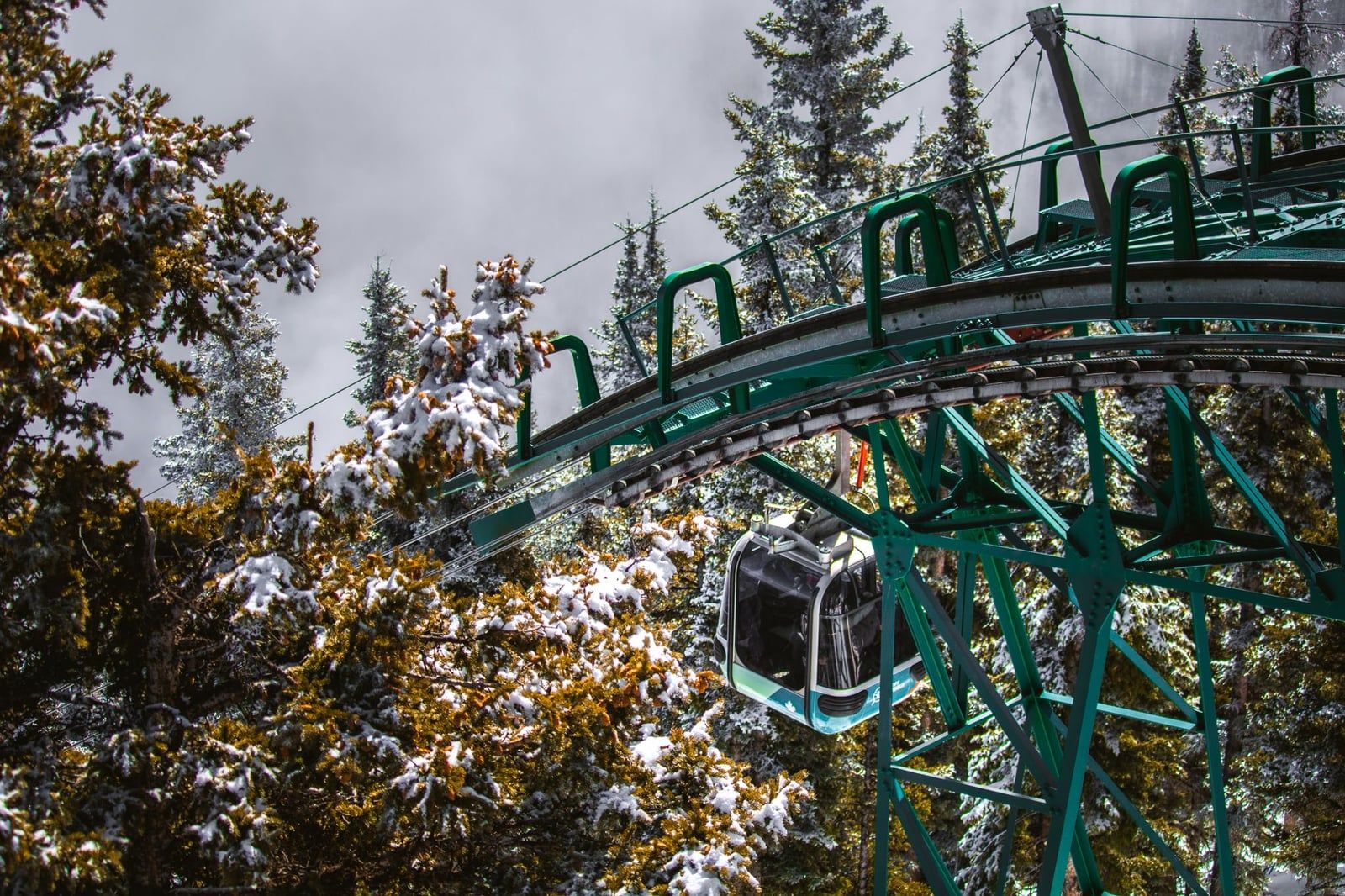
The Banff Gondola climbs Sulphur Mountain in about 8 minutes, gaining 698 m to a boardwalk at 2,281 m with views over six mountain ranges; tickets start around $70 CAD for adults. Afterward, the Banff Upper Hot Springs at the mountain's base costs about $7 CAD to enter, with towels, showers, and lockers included and swimsuit rental available for anyone who packed light. Soaking in mineral water at -15°C outside, steam rising off the pool, is one of the better ways to end a ski day.
- Dog sledding and horse-drawn sleigh rides run in short outings from Banff and Lake Louise.
- Fat biking and cross-country skiing use groomed track around the townsite and Lake Louise.
- Tubing and tobogganing suit families who don't want a full ski day.
- Wildlife spotting is easiest along the Bow Valley Parkway and Lake Minnewanka Loop.
Elk, bighorn sheep, and the occasional wolf show up along both roads in winter. Stay in the vehicle if you spot one and never approach for a photo. Our wildlife tours cover the best spots and how to keep a safe distance.
Town of Banff
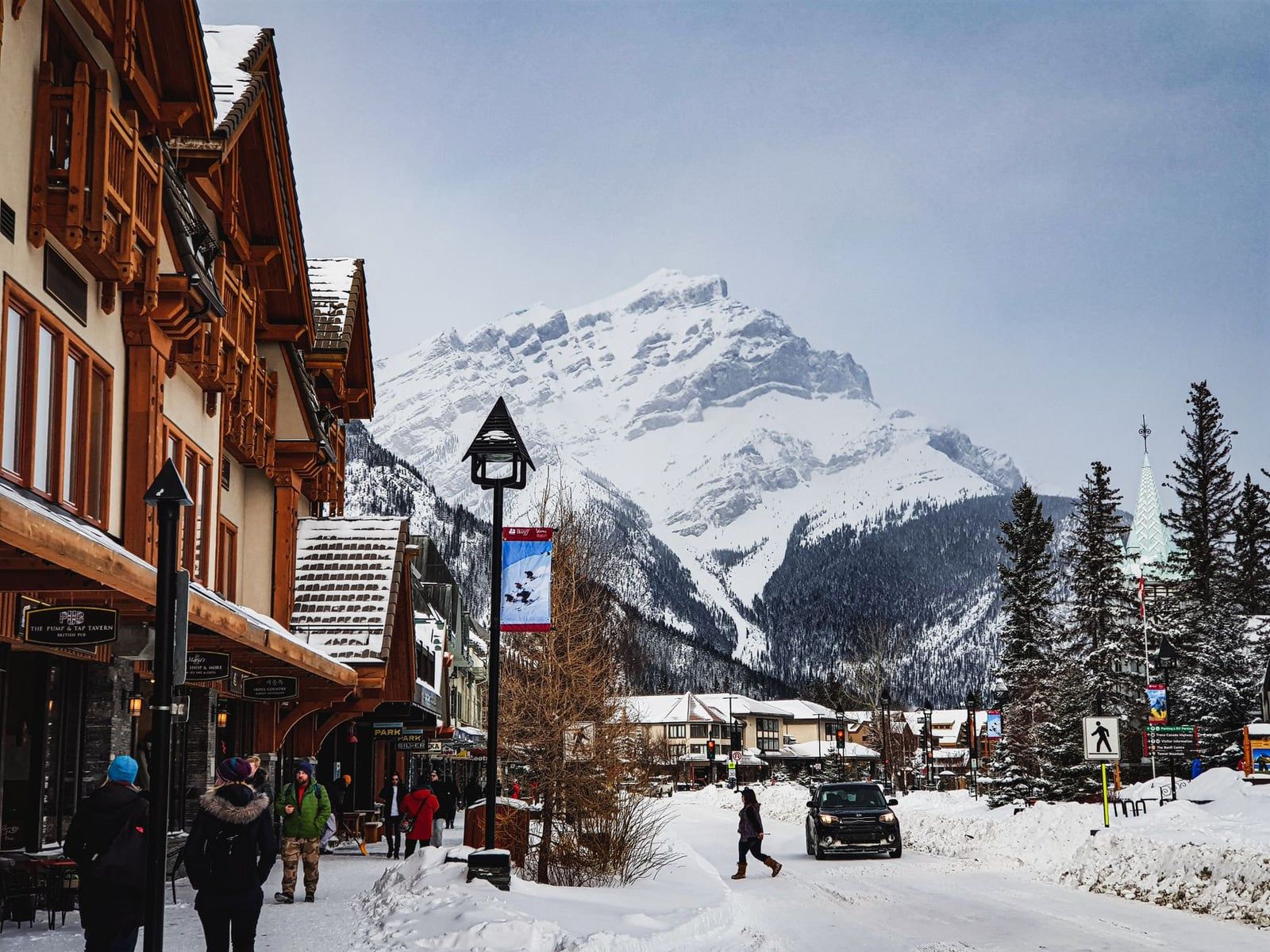
Walking Banff Avenue in winter, snow banked along the sidewalks and steam rising off rooftops, is a low-effort activity in its own right. Shops, cafes, and restaurants stay open through the season, and the townsite's flat, plowed streets make it one of the few parts of the park that's genuinely easy to explore without special gear. It's also the default base for anyone splitting days between skiing and sightseeing, more on that below.
Winter Safety: Avalanches, Ice, and Wildlife
Avalanches are the most serious risk. Parks Canada logs thousands of them across the park every winter, and any travel beyond a marked, packed trail should be treated as avalanche terrain, alpine bowls and steep gullies especially. Check the official avalanche forecast before heading out, and don't go into backcountry terrain without training and rescue gear if you're not with a guide.
Ice isn't automatically safe just because it looks solid. Parks Canada doesn't monitor or mark natural lake ice, so the rule of thumb is 15 cm minimum for one skater and 20 cm for a group, checked yourself before stepping out. Thin ice, disorientation, hypothermia, and frostbite are the hazards Parks Canada flags most often for winter travelers.
Bears mostly hibernate through winter, but they can wake and move around during a warm spell, and cougars, wolves, and elk stay active year-round. Carry bear spray on any trail, keep well back from tracks, and never follow them toward an animal. Report sightings of bears, cougars, or wolves to Banff Dispatch rather than approaching for a photo.
Winter tires aren't optional gear here. They're the law on the Icefields Parkway from November 1 to April 1, and a good idea on every other park road. Check 511 Alberta for real-time conditions before any drive, and remember there's no cell service on most of the Icefields Parkway if something goes wrong.
Winter Festivals and Events
SnowDays Festival fills Banff townsite with ice and snow sculpture carving and skijoring competitions, running January 16 to February 8 in its most recent edition. Check current dates before booking travel around it. Lake Louise runs its own Ice Magic ice-carving festival each winter, though access now requires a ticket, released each December and limited to guests of participating hotels such as the Fairmont Chateau Lake Louise and Baker Creek. The Banff Winter Carnival at Cave and Basin National Historic Site runs daily from 11 am to 5 pm through the season, November 29 to March 30 in its recent run, and is free with site admission — the easiest festival to just show up to.
Getting There and Getting Around in Winter
Calgary International Airport is the gateway, about 130 km and 1.5 to 2 hours from Banff townsite by road. Shuttle operators including Banff Airporter and the Banff Jasper Collection run direct coaches from arrivals to Banff hotels roughly hourly, and budget options like Vivo Green and FlixBus connect Calgary itself to Banff for less. Driving yourself on the Trans-Canada Highway gives the most flexibility for chasing side roads like the Bow Valley Parkway, provided the car has winter tires fitted. See our Calgary-to-Banff transfer options if you'd rather skip driving in snow.
Once you're in the park, Roam public transit and free ski shuttles link Banff townsite with all three SkiBig3 resorts, so skiers don't need a car at all during a ski-focused stay. Banff townsite itself is compact enough to walk everywhere; a vehicle mainly earns its keep for the Icefields Parkway or hopping between frozen lakes on your own schedule.
A daily park pass costs $12.25 CAD for an adult, $10.75 for a senior, and $24.50 for a family or group of up to seven in one vehicle; anyone 17 or under enters free. An annual Discovery Pass, valid at all Parks Canada sites, runs $83.50 for an adult. Fees are identical winter and summer.
What to Pack for Banff in Winter
- Insulated parka and waterproof winter boots with real tread
- Merino or synthetic base layers plus a warm mid layer
- Hat, insulated gloves or mittens, and a scarf or neck gaiter
- Wool socks, bring two pairs for wet days
- Ice cleats or microspikes for packed, icy trails
- Sunglasses and sunscreen for snow glare, plus hand warmers
Rent rather than buy for one-trip gear. Snowshoes, ice cleats, and skates are all available by the day in Banff townsite and at Lake Louise, cheaper and lighter than checking a bag full of gear you'll use once.
Where to Stay for a Winter Trip
Banff townsite is the easiest base for most winter trips: walkable, packed with restaurants, close to the Gondola and hot springs, and a quick shuttle ride from all three ski resorts. Lake Louise puts skiers and lake-ice fans right at the source, a couple of minutes from the ski hill and the skating rink, though dining options are thinner and everything costs more. Canmore, about 20 minutes outside the park gate, runs cheaper than either and still connects to Banff by Roam transit, a solid call for longer stays on a budget. Our full lodging guide breaks down specific hotels and neighborhoods in each.
How Many Days Do You Need?
Three days covers the highlights: a full ski day, an afternoon at Lake Louise and its rink, the Johnston Canyon ice walk, and an evening in Banff townsite. Five days adds room for a drive up the Icefields Parkway to Bow Lake and Peyto Lake, a second ski resort, the hot springs, and something like dog sledding. A week or more opens up day trips to Canmore or Kananaskis, a backcountry snowshoe outing, and a slower pace generally, useful if the trip mixes skiing and sightseeing with a rest day between.
Frequently asked questions
Is Banff worth visiting in winter?
Yes, for skiers, photographers, and travelers happy to trade turquoise-lake photos for frozen scenery and quieter trails. The main costs are cold temperatures and short daylight, about 8 hours in January.
What is the coldest month in Banff?
January, averaging a daily high of -5.3°C and a low of -14.9°C. The sharpest cold snaps, down toward -30°C, tend to land in late January or February.
Is Moraine Lake open in the winter?
The lake itself isn't closed, but its access road is shut to personal vehicles year-round and closed entirely, with no shuttle, once winter sets in. Reaching it means skiing or snowshoeing in.
Do I need a car to visit Banff in winter?
Not necessarily. Roam transit and free ski shuttles link the townsite to all three SkiBig3 resorts, and Banff itself is walkable. A car helps most for the Icefields Parkway and lake-hopping on your own schedule.
Can you hike in Banff in winter?
Yes, on a short list of low-elevation trails like Tunnel Mountain, Johnston Canyon's lower canyon, and the Lake Louise lakeshore. Ice cleats help, and anything off-trail should be treated as avalanche terrain.
What should I pack for Banff in winter?
An insulated parka, waterproof winter boots, warm base and mid layers, a hat, gloves, and ice cleats for packed trails. Expect daily temperatures anywhere from about -15°C to 0°C depending on the month.
How many days do you need in Banff in winter?
Three days covers the highlights, five adds the Icefields Parkway and a second ski resort, and a week leaves room for Canmore or a backcountry day.
What is closed in Banff National Park during winter?
Moraine Lake Road, the Lake Louise Summer Gondola, the Mt. Norquay summer chairlift, and the Columbia Icefield Skywalk and Glacier Explorer all shut down. The townsite, Banff Gondola, Upper Hot Springs, and Cave and Basin stay open.